Melbourne Ikebana Festival, 29 and 30 August 2026ikebanafestival.com

Sunday, 18 August 2013

Ikebana Gallery Award 2013


The winner of the Ikebana Gallery Award 2013 has been announced. http://bit.ly/15L8LNC


Ikebana Gallery Award FAQ

Q: How can I submit my work?
A: Use Email or Facebook.

To make submission easier, we have started a Ikebana Gallery Facebook Page, https://www.facebook.com/IkebanaGallery

Now you have 2 options to submit your works.
  1. Send by email. Please see Award page in our blog for the details, http://ikebanaaustralia.blogspot.com.au/p/award.html
  2. Simply like Ikebana Gallery Facebook Page and post and share your work. https://www.facebook.com/IkebanaGallery Your post needs to be approved to appear on the wall of the page. If you don’t have a facebook account, you cannot upload your work directly. However, you can still see the page.
Q: What happens next?
A: From facebook to blog.

We hope that more Ikebana works will appear on Ikebana Gallery Facebook Page. Then, Ikebana Gallery Committee will constantly select works from the Facebook Page and publish up to about 300 works per year on this blog, Ikebana Gallery Australia. Those works on the blog will be considered for the Ikebana Gallery Award.

Q: Can anyone post on the facebook page?
A: Yes, but there are some conditions for Ikebana teachers.

Please note that the Ikebana Gallery Facebook Page is for Ikebana students. To be considered for Ikebana Gallery Award, you have to be a student of Ikebana at the time when you are submitting your work.

Qualified Ikebana teachers may submit their works to the Ikebana Gallery Facebook Page, but they have to indicate that they are teachers. Their works will not be published on our blog. http://bit.ly/1cHtQlR

Q: I’d like to know the result of the competition. How can you keep in touch with me?
A: Use Email or Facebook.

There are several options to be in touch with us and to receive updates. Easy options are either 1 or 2.
  1. Go to the Ikebana Gallery Australia Blog. Fill in and submit your email address in Follow by Email section on the right side column.
  2. Create a Facebook account. Like Ikebana Gallery Facebook Page and you will receive updates. https://www.facebook.com/IkebanaGallery 
Simply by submitting your works you are supporting this project. If you want to support us even more, visit the “Sponsors” page in this blog. http://bit.ly/1cHtQlR

Shoso Shimbo, PhD
Ikebana Gallery Australia

https://www.facebook.com/ikebanaaustralia

Sunday, 4 August 2013

Ikebana Today 14


The Ikebana boom after World War 2 was the greatest in Ikebana history. It was Sofu Teshigahara who was the driving force behind the boom. He was able to give Ikebana the status of a new brand. He was aware that promoting Ikebana as a kind of spiritual training or as training to become a good housewife would not work. 

It's often said that people who tend to seek status symbols such as famous brand clothes or sport cars are those with an inferiority complex. 

Since the Meiji Restoration Japanese have had a strong inferiority complex towards Western cultures. Western literature, films or even religions were eagerly taken up by the Japanese as if they were commercial brands. Under such conditions how could it be possible to promote Ikebana?  It would certainly not be effective to promote Ikebana as Japanese traditional culture. 

The magic word Sofu came up with was ART. Declaring that Ikebana is an art made it possible to attract over 5 million people. It has to be noted that the art at the time meant Western art. Although art was a truly a magic word to promote Ikebana, it was a curse for Ikebana at the same time. I’ll talk more about the relationship between Ikebana and art in the next issues.

This is a work I made for Hanabishi restaurant in Melbourne city. The restaurant introduced a special set menu of $68, which I highly recommend. I hope you will enjoy their refined dishes as well as my flower. I also hope that more business owners will display Ikebana for their shops or offices. There are many Ikebana artists who would like to challenge such opportunities and their fees are usually very reasonable.

http://www.shoso.com.au
https://www.facebook.com/ikebanaaustralia

Sunday, 28 July 2013


Tuesday, 9 July 2013

Ikebana Today 13


Let’s review what we have discussed so far. During the period of rapid economic growth, Ikebana became the most popular hobby among young women in Japan. Although there is no statistic data available regarding the number of Ikebana students, some reports put the number at as many as 30 million people in late 1960s. It is possible that Ikebana helped those women gain an image of sophisticated ladies desirable for future wives.Later we will look further into the meaning of the images Ikebana created at that time.   

There is one thing we need to stop and consider here. Generally Ikebana may have been accepted as ideal training for becoming a housewife. But why did so many women learn it at the first place? The fact is that women did not have equal opportunities in the labour market. Rather than spending money for gaining degrees or qualifications, many of them spent money on training to become housewives. So, if women gained more opportunities for jobs, Ikebana would become less popular.     

Let’s now consider how Sofu Teshigahara, the first headmaster of Sogetsu School led the Ikebana boom. Although Ikebana was widely accepted as training for housewives, Sofu was aware that such a notion would not have wide appeal. He needed a new strategy. He is often described as an innovator of Ikebana, due to his contribution in developing new Ikebana styles. However, perhaps his most important contribution is that he created a new meaning for Ikebana.  

What is the new meaning of Ikebana? How could he reinvent Ikebana in the light of the Japanese history from Meiji to after the war? The new meaning of Ikebana made it possible for him to attract over one million members in thirty years or so. On the other hand, the new meaning was a curse for him at the same time. I’ll talk more about it in the next issue.

This is a work I created for a trade show stand. I used the client’s logo for the design using one hundred anthuriums in test tubes. This may not be a typical Ikebana work, but that does not matter for professional artists who value clients’ need.

We are running an Ikebana competition again this year. It is becoming very interesting. Please see the awarded works in our blog.


http://www.shoso.com.au 

Tuesday, 25 June 2013


Sunday, 23 June 2013

Wedding Flowers


A basic package for wedding flowers includes a hand tied bouquet (partially wired)  and buttonholes (wired).
My client asked me this time to combine white lilies and calla lilies. It was a challenging combination, but it turned out to be a wonderful naturalistic round bouquet with over 30 rose heads and a French double satin ribbon.
http://www.shoso.com.au


Wednesday, 12 June 2013

Ikebana Today 12


We are investigating the Ikebana boom after the WWⅡ. It is a very complicated phenomena but one thing we can say is that most of the participants in the boom seemed to be young women. Although there are no reliable statistics about the number of Ikebana students, some estimates put it up at around thirty million between 1965 to 1975. After the period of rapid economic growth, the number gradually decreased but it was estimated to be more than ten million in 1990. It may be less than it used to be, yet it was a huge number! Why is it that Ikebana was so popular at that time?

My hypothesis is that Ikebana gained new status after the war. I have said before that Ikebana was a sign of status for a virtuous person in the Ikebana boom in the Edo period. What kind of status did Ikebana represent after the war? Certainly many women found it helpful in impressing future partners. Compared to good looks or a good academic record, being an Ikebana student is much easier and more economical. Nevertheless it had a strong effect. What was that?

To answer that question, we need to look at how the Sogetsu school promoted Ikebana after the war. It was founded in 1927 and it gained over one million members in only 30 years or so. If this was a new religious movement or some kind of social movements, there would certainly be much research into it. However, few researchers are interested in Ikebana. Anyway, the point is that Sofu, the founder of Sogetsu school gave a new meaning to Ikebana and lead the Ikebana boom after the war. I’ll talk more about that in the next issue.

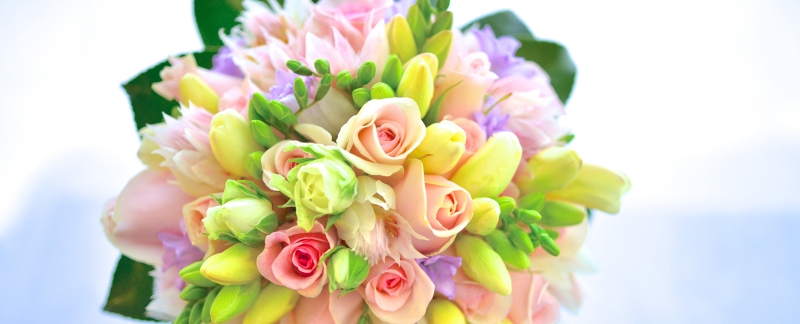
This is a wedding bouquet I made for a client who wanted me to use so many different kinds of flowers. This is a good example of how I have to as a professional balance what a client wants and aesthetic effects. 

I’ll  give a talk about Hiroshi Teshigahara at Kyoto University on 1 June. Please come if you can. Contact International Society of Ikebana Studies (ISIS) for the details. http://ikebana-isis.org/    


http://www.shoso.com.au

Monday, 13 May 2013


Saturday, 4 May 2013

Ikebana Today 11


How can we interpret the Ikebana boom after the war? This is a very interesting topic which may shed light on one aspect of Japanese society. What I’ll do here is just propose some hypotheses. 

First, let’s consider who was involved in this boom. Ninety five percent of the Ikebana population is women. Some people may think Ikebana is just for women. But Ikebana was for men from its beginnings in the Muromachi period up until the Edo period. It gained popularity among women in the Edo period and became a "must have" skill for women after the Meiji period.

It is also interesting to note that male Ikebana practitioners, 5 % of the Ikebana population, are most likely to be teachers. We can probably assume that the majority of the people involved in the Ikebana boom after the war were young women who practiced Ikebana for a few years as a hobby.

Why did those women choose Ikebana? This is the biggest question. We need to carefully look at the Japanese society at that time. It was a male dominated society. Women were discriminated against in many, often subtle, ways. Since the equal employment opportunity law of 1985 the situation seems to be changing. 

Interestingly, Ikebana seems to be less popular since 1985. I don’t want to say categorically that the popularity of Ikebana is related to gender inequality. But this may be something we need to investigate further in considering the position of Ikebana in Japanese society - is there a link between the popularity of Ikebana and the role of women in society?

I made this display for a graduation ceremony at a TAFE college. This classy oriental lily, the Sorbonne, has a very clear pink at its centre. Look at it for one minute or so in the morning and you feel invigorated straight away.

Ikebana artists are good at this kind of display for events or parties. We should be promoting more how much impact floral displays can have on people. 


http://www.shoso.com.au 

Monday, 15 April 2013


Sunday, 14 April 2013

Display for a Stand at a Trade Show

Fresh flowers can make your stand so impressive at any trade show or expo!

Nice feedback from the client: 

Hi Shoso, thanks for your beautiful installation on the stand.  It's fabulous.  Once again, thanks for helping our stand look so amazing.


http://www.shoso.com.au

Thursday, 11 April 2013

Shoso at International Conferences


Shoso Shimbo has been invited to present papers based on his Masters exegesis. Both papers will be published and will be available at some stage.  

1. "Ikebana to Contemporary Art: Cross Cultural Transformation in Rosalie Gascoigne" (English presentation)
The Asian Conference on Cultural Studies by The International Academic Forum 
When: 24-26 May 2013
Where: Osaka, Japan
http://www.accs.iafor.org


2. 下記の通り京都大学で勅使河原宏と現代芸術についての研究発表を行います。
日本語での発表になります。御都合がつきましたら是非お越し下さい。
詳細は国際生花学会まで。http://ikebana-isis.org/

"Hiroshi Teshigahara in the Expanded Field of Ikebana" (Japanese presentation)
The International Society of Ikebana Studies (ISIS) 
When: 1 June 2013
Where: Kyoto University
http://ikebana-isis.org/

Abstract

The field of free style Ikebana today has expanded to incorporate many themes in common with contemporary Western art, in particular with installation and assemblage. 
From 1980 to 2001 Hiroshi Teshigahara explored the possibilities of installation through his bamboo works. Focusing on his unique attitudes toward the natural materials and his creative strategies of repetition and accumulation, this paper agues that his site specific installations fall within the context of the contemporary Western art, moving beyond the underlying Japanese cultural and spiritual traditions.

要旨


 明治維新以後、西洋芸術の強い影響下発展を続け、その領域を拡張してきた生花の中には、現代芸術、殊にインスタレーションとアセンブラージュとの共通の要素を持つものが出てきた。「生花における拡張領域」第1部ではインスタレーションとの関連で勅使河原宏を扱う。
 1980年以降、約20年に渡って宏は竹を用いた生花作品を通じ、生花のインスタレーションとしての可能性を追求した。現代芸術史上のインスタレーション発生のモチーフは生花のひとつの重要な可能性を示すものとして宏にとって共感できるものであったろう。
 また、宏の自然観、自然素材に対する独特の態度、最後の作品群のグリッド構造(格子)は、いずれもモダニズムをはじめとする西洋芸術の影響を深い次元で受容した必然的な帰結だった。
 竹を割り、線と見なすということは、自然素材を分解し、その表層的属性から切断し、抽象的な単体にまで還元することであり、アセンブラージュ作成の初期段階における既存の関係性から素材を切断、抽出する作業に類似している。共に素材を浄化し、その本質に迫ることを可能にする。続く制作過程では反復と累積というミニマリズムにも共通するアプローチで生花的秩序を内包させた抽象的形態のインスタレーションを創造した。
 現代芸術におけるグリッドの重要性に関し、クラウスはその機能が構造主義が着目する神話の機能に類似していると指摘する。様々な二項対立の矛盾を解消することなく包摂し、精神性への可能性を示唆する。宏の最後の作品群についてはそのような可能性を認めることができよう。
 生花の領域をその極限まで拡大することで、表面上、過激で非生花的な作品でありながら、生花の伝統、精神性を保持し、同時に現代芸術の文脈にそれを位置づけることに成功した稀な例となった。
 「生花における拡張領域」第2部ではロザリー・ガスコインを扱う。現代芸術から生花に移行した宏に対し、生花から現代芸術に移行したガスコインは、宏と対照的な諸相を持ちながら、創造の核心ではある種の共通性を持つ。極端な形態ではあるが生花のアセンブラージュとしての可能性を追求した彫刻家と見なすことができよう。ほぼ同時期に活動した宏とガスコインを現代生花の拡張領域における対極として位置づけることで、新たな視野を得ることができる。

http://www.shoso.com.au

Sunday, 7 April 2013

Ikebana Today 10


The greatest Ikebana boom occurred after World War 2. Jiyu-bana, a free style Ikebana, contributed significantly to the boom. The Juyubana movement became popular between 1926 and 1934. It lead to the New Ikebana movement, avant-garde Ikebana movement, then on to the great Ikebana boom.

It was Suido Yamane who worked hard to establish Jiyubana. He was a very popular Ikebana artist at the time with many students. Because he insisted that there is no need to learn any rules in Ikebana forms, however, he was very unpopular among traditional Ikebana teachers. In one of his articles published after the war, he reported that he was “lynched” by other Ikebana teachers. Although we don’t know exactly what happened, we can assume he had a really hard time. Anyone trying to do something new inevitably has to have a difficult time in the traditional art world.

However, no one has ever been as unpopular as Sofu Teshigahara, who established the Sogetus School in 1927 at the age of 27. He had a traffic accident in 1936. When this news was passed on to some Ikebana teachers who were having a party, they drank a toast for his misfortune. His unpopularity seems to be related to the fact that he later became the most significant Ikebana artist in the 20th century (Kudo,1994). 

In coming issues, I’ll talk more about Jiyubana and its relationship to the Ikebana boom after the war.

This is one of the 12 works I exhibited at my solo exhibition at Monash University to complete my Master of Fine Art Degree. The show was a new beginning for me. Please visit my website to see a 3 min slide show of the show.

http://www.shoso.com.au


---------------------------------------------------------------
News: Shoso at International Conferences
---------------------------------------------------------------
Shoso has been invited to present his papers based on his Masters exegesis. 

"Ikebana to Contemporary Art: Cross Cultural Transformation in Rosalie Gascoigne" (English presentation)
The Asian Conference on Cultural Studies by The International Academic Forum 
When: 24-26 May 2013
Where: Osaka, Japan

"Hiroshi Teshigahara in the Expanded Field of Ikebana" (Japanese presentation)
The International Society of Ikebana Studies (ISIS) 
When: 1 June 2013
Where: Kyoto University 

Both papers will be published and will be available at some stage.  


Thursday, 4 April 2013


Thursday, 21 March 2013

Melbourne International Flower and Garden Show 2013 - 2/2


Artist Statement - MIFGS 2013

From it's very beginnings, the relationship between people and the environment has been central issue in Ikebana. 

Ikebana arrangements are in a sense a symbolic representation of the harmony that can be achieved between people and nature. However it is becoming more and more clear that we cannot achieve harmony with nature without changing our behavior. 

This work, Meditation on Nature, explores the idea of our changing relationship with nature. The abstract forms of the floating bamboo balls and the flowing split bamboo framing the beauty of the floral work suggest the possibility of a rethinking of our interaction with nature.

Sponsorship

Become a sponsor of Shoso to promote your business to over 100,000 visitors to the show. Please contact Shoso by October to discuss several options. Alternatively, you can just leave your advertising materials or business cards in front of our display. We will contact you later. But this is an expensive option.

http://www.shoso.com.au