Review by ClassikOn
Jessica Aszodi, Jacob Abela & Shoso Shimbo | Distilling Nature
29 August 2026, Melbourne Recital Centre, VIC
Part of the Melbourne Ikebana Festival 2026

A Concert? An Installation? Something Else Entirely?
Alerted to this extraordinary event at the very last minute, I arrived at the Melbourne Recital Centre rushed, late and considerably more anxious than one would normally expect before an evening promising the combined pleasures of piano, voice, Japanese ikebana and fragrance.
Perhaps that was the perfect preparation. Because Distilling Nature turned out to be one of the most unusual, intriguing and unexpectedly transporting performances I have encountered for some time.
This was emphatically not a conventional recital or opera. Instead, Jessica Aszodi’s extraordinary voice, Jacob Abela’s exploratory piano, Dr Shoso Shimbo’s evolving ikebana and Yen Huynh’s fragrance combined to create something closer to immersive performance art — an artwork experienced simultaneously through sight, sound, scent, space and movement.
And for quite some time, I wasn’t entirely sure what I was experiencing.
An Unpredictable Musical Landscape
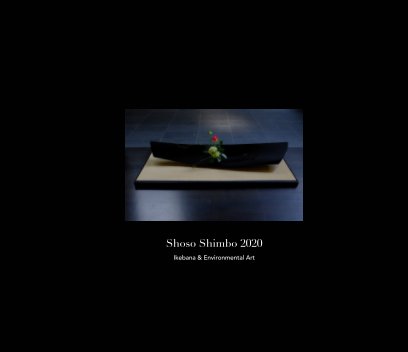
Abela sat at the Steinway, while Shimbo began constructing an elaborate floral sculpture behind him — one stem, one branch, one bloom at a time.
Then came Aszodi – Her voice could be ethereal one moment, ghostly the next; phrases appeared, disappeared and hovered without necessarily resolving where conventional musical instinct told us they should.
The programme was gloriously eclectic: Morton Feldman, John Cage and Brian Eno; Charles Ivesand Liza Lim; Giulio Caccini and Meredith Monk; Australian experimentalist Keith Humble; Björkand Stephen Sondheim.
On paper, it looked almost wilfully disparate. In performance, however, the unexpected juxtapositions became the point. Cage’s silences and sparse textures flowed into Eno’s ambient world; Ives brought nature and memory into sharper focus; Caccini suddenly transported us back to the beginnings of opera; Meredith Monk and Liza Lim pushed the voice into theatrical and experimental territory. There was no reassuring formula. And gradually, that became strangely liberating.
When the Spell Took Hold
The first great jolt of recognition came with Björk’s Jóga. A familiar song suddenly sounded entirely different in this environment — its emotional urgency magnified by Aszodi’s extraordinary vocal presence, Abela’s restless piano and the slowly developing landscape of flowers.
But it was Stephen Sondheim’s Every Day a Little Death that truly broke through – I didn’t know the song well, yet it felt strangely familiar. Aszodi sang it with such emotional intensity that the distinction between “performer” and “character” seemed to disappear. Abela did not merely accompany her. His piano seemed to circle, question and breathe around the voice, creating an almost symbiotic musical relationship. And something unexpected happened…
I stopped analysing.
I stopped wondering what the piece was supposed to mean.
I simply listened.
I almost cried.
The audience applauded — only the second spontaneous eruption of applause that evening. Until then, there had been an almost unspoken agreement that applause might break the spell.
Flowers Become Performance
Meanwhile, Shimbo’s ikebana had been quietly transforming the space. This was not floral decoration. It was performance in its own right. What began as a relatively sparse arrangement gradually became an enormous sculptural environment of pinks, whites, greens and yellows, with branches and sweeping forms reaching around the performers.
The fascinating question was whether we were watching three separate art forms — music, voice and ikebana — occupying the same space, or witnessing one artwork expressed through three different languages. There were moments when my attention moved from singer to pianist to florist almost instinctively. That shifting focus was part of the experience.
The addition of Huynh’s fragrance completed the sensory equation. Distilling Nature asked us not merely to listen, but to look, smell, feel and imagine.
The Audience Becomes Part of It
The intimate Salon setting was crucial. We were close enough to watch Shimbo physically construct the work, while Aszodi and Abela performed only metres away. At times the combination of sound, colour, scent and stillness became almost meditative. I found myself wondering whether every person in the room was experiencing the same performance at all — or whether each of us was constructing a private version of it.
Then, inevitably, reality intervened. A man in the row ahead suddenly sneezed loudly, jolting me spectacularly out of my reverie. Perhaps that was useful too. It reminded me that this was not an escape from reality, but an invitation to experience reality differently.
From Performance to Installation
By the finale, Yuki no hana, the floral creation had fully blossomed around the musicians. And then the ritual changed. The audience was invited to photograph the installation, and the contemplative gathering instantly became a cheerful scrum of phones, selfies and group photographs.
It was an amusing contradiction: an ephemeral artwork designed to be experienced in the moment had immediately inspired everyone to preserve evidence of it. The artists stayed behind, mingling with the audience. The boundary between performer, artwork and spectator effectively disappeared.
The Final Measure
I arrived at Distilling Nature anxious, rushed and determined to work out what I was supposed to be reviewing. I left remarkably tranquil. That, ultimately, may be the most compelling measure of its success.
The music had stopped. The fragrance was fading. The great floral construction would soon disappear. Yet something remained — a lingering sensation that was difficult to define but impossible to dismiss.
Distilling Nature may not fit comfortably into the categories of concert, opera, installation or performance art. Perhaps that is precisely why it works. It asks us to abandon expectation, surrender our senses and simply experience the moment. And for an hour or so, in the heart of the Melbourne Recital Centre, that was exactly what happened.
Written by Warren Wills with George Stamkoski