Melbourne Ikebana Festival, 29 and 30 August 2026ikebanafestival.com

Monday, 28 May 2012

Shoso at the National Gallery Victoria


Shoso created a large Ikebana work, Flower Torii Gate for the Greater Asia Co-Prosperity Sphere Project, a part of the the Next Wave Art Festival.
When: 17 to 27 May 2012
Where: The NGV Studio, Flinders St, Federation Square, Melbourne City


Message from the artist who is in charge of the project

Hi Shoso,

I would like to take this opportunity to issue a warm thanks on behalf of Abdul, Casey and myself for being part of The Greater Asia Co-Prosperity Sphere with us. It's been an absolute pleasure to showcase your talents and you've been so gracious with your time and company. The flower gate and you're demonstration pieces really add an invaluable dimension to the work and we couldn't imagine the space without them.

 I hope you were happy with the demonstration yesterday, as we felt that the whole day was a complete success across a broad range of demographics. We wanted to make sure you knew how much we appreciated your contributions to the project and do hope you come to visit the project this Friday at the closing ceremony if you are free.

Many thanks and kind regards,

Nathan 


http://www.shoso.com.au

Monday, 21 May 2012

Corporate Dinner at Crown


Shoso created special displays and centrepieces for a cooperate dinner show.  We have received very positive feedback from the client. Thank you many assistants for your help.

"The arrangements looked absolutely spectacular and the client was delighted with all of your amazing work. Thank you again, it was a pleasure working with you and I look forward to doing so again."

"Thank you very much for the wonderful arrangements you created for the Sakura dinner. The night was a wonderful success, and our client and Japanese delegates were really very impressed. Everything came together really, and we are very appreciative of the hard work."

http://www.shoso.com.au


Thursday, 10 May 2012

Melbourne International Flower and Garden Show 2012


In the wake of stressful experiences, people often reassess what is important in their lives. Every year in November, the monks at the Kiyomizu Temple in Japan choose a character that best sums up the year. Last year, it was the character Kizuna, which means “relationships”.

In 2011 Japan suffered a devastating tsunami and nuclear disaster and for many people it was their community and relationships that helped them get through the most difficult times. The same can be said for flood and fire ravaged communities in Australia, and in any place where disaster has uprooted lives.
In Ikebana the relationship between people and environments has long been a central issue. 

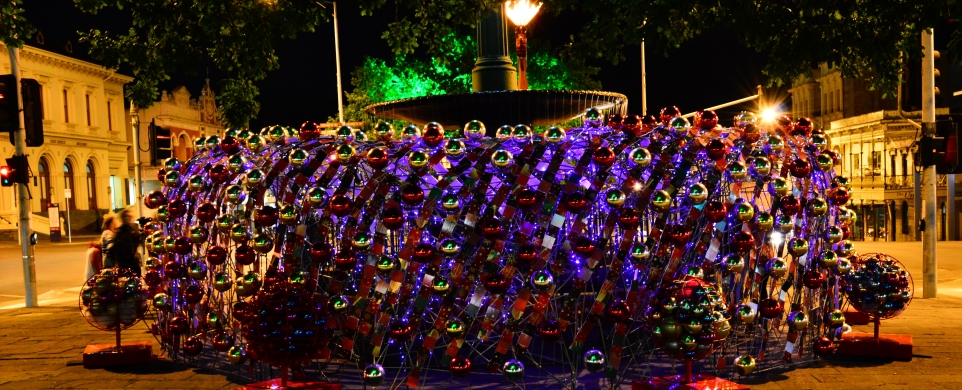
In this work, I explored the idea of relationship. There are several independent abstract forms, large balls made of plants and flowers, but it is the relationship between the elements that brings both tension and harmony to the work. This work Kizuna is also a metaphor for love.

http://www.shoso.com.au


Sunday, 6 May 2012

The Ten Virtues of Ikebana 10b


As I mentioned last time, three of the Ten Virtues of Ikebana are concerned with the goals of Ikebana training. Basically, through Ikebana you are able to maintain a peaceful mind, to be elegant and to get in touch with your spiritual side. 
It is interesting that these are all spiritual goals in essence. Compared with many popular self-development books or commercial spiritual movements, Ikebana is aiming at something far more spiritual. Ikebana is just like a form of pure meditation.
Some may consider knowing Ikebana to be something very special, but it simply means they know a bit about meditation. There is nothing to be so special about it.
Ikebana has nothing to do with secular values such as money or power. However, I don’t deny that I do Ikebana as a business. I see business opportunities as opportunities to practice Ikebana, my spiritual training.
I’ll talk more about different aspects of Ikebana from the next issue. Hope you will enjoy it.
I made this work for the entrance in our house using left over materials. To fix the bird nest fern leaf, I attached a short branch to the base of it.


http://www.shoso.com.au

Thursday, 22 March 2012

Weekly Display


My Monday morning is a time for meditation. I have been doing weekly flower for Hanabishi restaurant in Melbourne for over 10 years. This is the best way for me to start a week.

http://www.shoso.com.au

Friday, 9 March 2012

Special Bouquets


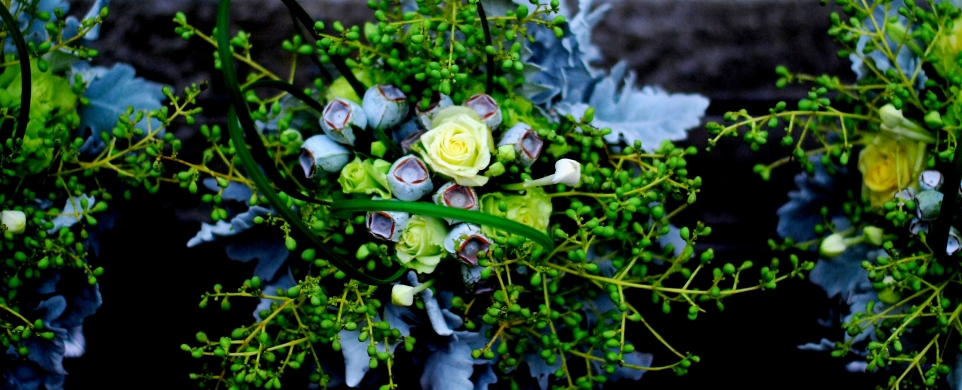
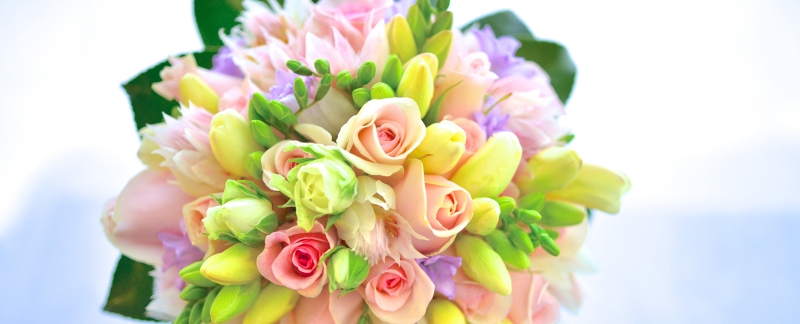
I made these special hand tied bouquets for an international conference for women's health and welfare. Their request was to create very special bouquets using Australian native plants for their very special presenters.


I chose lime roses for main flowers. To enhance their mysterious colour, I had to use my usual Ikebana approach. Rather than showing what humans can do to nature I tried to show what nature can be.


I knew that just beautiful is not enough. In the end I was able to create one of the most interesting bouquets I have ever made.


Following is feedback from my client.


"I have just got home from the conference now and wanted to thank you so much for the most beautiful flower arrangement and bouquets.  Absolutely stunning!  

Reuben has taken lots of photos of your masterpiece on stage and will send through to you shortly.  They were an absolute beautiful and you had everyone talking about your arrangements.  A very big hit! 

I met one of your students who recognised your work, she was thrilled with the display.  

Thanks again Shoso, excellent work.  I will definitely be in touch again soon and Reuben will send through photo's etc."


http://www.shoso.com.au

Wednesday, 29 February 2012


Monday, 6 February 2012

Ikebana for Special Event


I created an Ikebana work for a graduation ceremony at a TAFE college in Melbourne.

”Our graduation night was very successful, 120 guest enjoyed your flower.
Also holmesglen staff love your bouquet.”

This work was so popular that we used this image for free downloadable calendars for April 2012. Visit Shop page in Shoso's site.

http://www.shoso.com.au

Thursday, 2 February 2012

The Ten Virtues of Ikebana 9


The ninth of the Ten Virtues of Ikebana is to be elegant all the time. This is about the highest state of mind that Ikebana practitioners can attain and it has a spiritual aspect as well. This is the state where a person can become one with nature. Is this state related to Buddhism, or is it Shinto?

In the development of Ikebana since the Muromachi period, Buddhist monks, in particular, Ikenobo monks have played a very important role. Aa a result, it is often pointed out that there is a close relationship between Buddhism and Ikebana. Some people associate Ikebana with Zen, but Ikenobo does not belong to Zen Buddhism but to the Tendai sect of Buddhism. 

It seems a bit confusing when it comes to the philosophical aspects of Ikebana. Actually there are so many aspects of Ikebana culture that have not been adequately investigated academically. 

To become one with nature seems to be the essence of Shinto. However, the Shinto scholar Takeshi Mitsuhashi argues that the Buddhist enlightenment is freedom from any attachments and that is the same as Makoto in Shinto. The goal of both religions seems to be the same. There may be many ways to achieve spiritual enlightenment, but there is only one goal. That seems to be the Japanese way.

I made this work for Lesley Kehoe Galleries. The form of the container helped fix the materials. As an international gallery, this gallery always shows wonderful contemporary Japanese art works but the gallery itself has a great atmosphere. 

We started an Ikebana competition for Ikebana students to further promote Ikebana in Australia. We are pleased that Ms Kehoe has become one of the judges. I’ll talk more about the competition near future. See the below for the details, 


http://www.shoso.com.au

Wednesday, 25 January 2012


Tuesday, 3 January 2012

The Ten Virtues of Ikebana 8


The eighth of the ten virtues of Ikebana is a peaceful mind. Through practicing Ikebana, you can maintain a peaceful mind and consequently you can live longer.

Great people tend to be calm whatever happens in their lives. On the contrary small people get upset easily over small things. 

Also, as was pointed out by Inazo Nitobe in “Bushodo: The Soul of Japan”, calmness is the other side of braveness. 

With respect to this idea of calmness, what we are aiming for as we practice Ikebana is actually an important aspect of Bushido. In other words, this virtue makes the claim that  Ikebana is a form of spiritual training. 

This is a common assumption in the Japanese tradition, that art is a kind of spiritual training.

While in general art focuses on humanity rather than nature in the West, it is united with nature in Japan. In Ikebana particularly artistic beauty is achieved by expressing the essence of natural life. To be able to express beauty in artwork, artists have to achieve personal development through spiritual training. That seems to be a common view. 

The difficult thing is how to teach the spiritual aspect of Ikebana, in particular to people with non-Japanese cultural backgrounds.

Unfortunately one of the modern Ikebana movements in 1930’s moved away from the spiritual aspect of Ikebana. Many of the Ikebana schools that expanded overseas after the world war two have been influenced by that movement. I may have a chance to talk about this significant cultural change sometime in the future.

This month’s work is a New Year’s arrangement I made for Koko restaurant, Crown in 2009. I used bricks inside the container to fix bamboo. 

http://www.shoso.com.au
http://shososhimbo.blogspot.com/

Saturday, 17 December 2011

The Ten Virtues of Ikebana 7b


In my last article, I pointed out the similarity between the  seventh virtue, cleansing evil thoughts and the second virtue, selfless mind. It is true that both virtues are about the calming effects of Ikebana, but there is a small difference if you look into their definitions closely. In looking into it, the hidden essence of Ikebana may reveal itself.
Among the ten virtues of Ikebana, there is another virtue that refers to the effect of Ikebana on psychological states. That is the third virtue, pleasure without words. I was surprised to find that these three virtues are closely related on this level. 
Just think about Mamemaki. “Evil, Out; Fortune, In” is the phrase people use to celebrate this annual event. “ Evil, Out” means in essence cleansing Kegare, or impure states and this is the same as  the seventh virtue, cleansing the evil thoughts. Once Kegare is cleansed, we reach the neutral state of Ke. “Fortune, In” means to bring the cerebrated state, Hare.  This is the process similar to the change from pleasure without words to selfless mind. 
In short, behind these three virtues of Ikebana relating to the psychological states is the theory of celebration in Shinto. This will be a small part of my master paper in fine arts, which I will complete at the end of next year.
Although some people argue that Shinto is a folk religion compared to some world religions such as Christianity or Buddhism, its cultural significance should not underestimated in any way. 
This is a work I made for a casual wedding reception at our home. My work was nice backdrop for wonderful dishes made by the groom who is a chef at Hanabishi restaurant. Since Christmas is close, I added holly leaves, red berries and vines painted silver. I used floral foam to fix the flowers. 


http://www.shoso.com.au
http://shososhimbo.blogspot.com/

Wednesday, 14 December 2011


Sunday, 4 December 2011


Friday, 2 December 2011