Melbourne Ikebana Festival, 29 and 30 August 2026ikebanafestival.com

Tuesday, 5 August 2014


Friday, 1 August 2014

Ikebana Today 26


We have been examining this huge question, what is Ikebana? We have been trying to find how the word, Ikebana came about historically. I assumed that ikebana (a style of Ikebana) was created in contrast to Tatehana and Rikka, the mainstream styles of Ikebana. 

In answer to my question about the origin of ikebana Dr Osamu Inoue (Vice president of International Society of Ikebana Studies, Kyoto University of Art and Design) sent me his paper, “ Chabana and Nageirebana in the early modern times: Their differences and similarities.” It is a brilliant work and suggests that my assumption about ikebana was right to some extent.

However, the origin of ikebana is too complicated to talk about in this essay. There are so many definitions of ikebana in Japanese history. One thing we do know is that in the early modern era ikebana was in opposition to Tatehana, the style of flower arrangements mainly for ceremonies. In Tatehana, the main stem tends to stand upright at the centre of the arrangement. Some people felt that the style was too rigid and too artificial. It was a wish to create something more naturalistic that motivated the development of ikebana. 

At the base of the long history of Japanese Ikebana philosophy is the opposition between Tatehana and ikebana, between artificial and naturalistic, and man and nature. These opposing ideas led to a deepening of the philosophy of Ikebana. The result was a unique Japanese art form with a rich aesthetic.

Ikebana means to make flowers alive, which can be achieved through respecting how they are in nature. If you manipulate flowers too much, you are not making them alive. I’ll discuss this point further sometime soon. 

This is the work I made for Hanabishi restaurant in Melbourne. They always prepare interesting materials for me and I was given yuzu this time. I hope you will enjoy my Ikebana works as well as the beautiful dishes at Hanabishi. 

This is the third year we run Ikebana Gallery Award for the Ikebana students all around the world. It seems to be popular with the number of page views over 50,000. We will publish the result in August. Please visit our new website.
http://ikebanaaustralia.blogspot.com.au


http://www.shoso.com.au 
https://www.facebook.com/ikebanaaustralia

Saturday, 26 July 2014


Artists Emerge at WTC

Shoso Shimbo was selected for a sculpture exhibition, Artists Emerge @ WTC curated by MARS Gallery.

When: Wednesday July 16 to Sunday August 24, 2014Where: The WTC atrium, The World Trade Centre, Siddeley St, Melbourne Admission: Free  


https://www.facebook.com/ikebanaaustralia

Saturday, 5 July 2014

Ikebana Today 25


In the last issue, I presented a hypothesis that the term Ikebana may have been created in contrast to Rikka, the main stream of Ikebana. Notice that I am using Ikebana in two different ways here, Ikebana as a historically specific style of Ikebana and Ikebana as a general term for various forms of Japanese flower arrangement. I’ll use ikebana for the former and Ikebana for the latter in this article.

Does my hypothesis have any grounds? Kobayashi (2007) states that Rikka was established in the early Edo period (1603-1868). In that case, the term ikebana may have appeared in the early 18th century when many textbooks on Ikebana were published.

I consulted with Dr Kobayashi and Dr Inoue, president and vice president of the International Society of Ikebana Studies, ikebana-isis.org. I feel as if I am getting tutorials from two of Japan’s top Ikebana researchers. If you are interested, please visit isis’s site and join the society or purchase its journal.    

Anyway, their advice was that ikebana appeared much earlier in Japanese history. It already appeared in one of the first Ikebana textbooks, Sendensho (1445). I need to rectify my hypothesis a bit. The term, ikebana may have come about in opposition to Tatehana rather than Rikka. If so, what does that mean?          

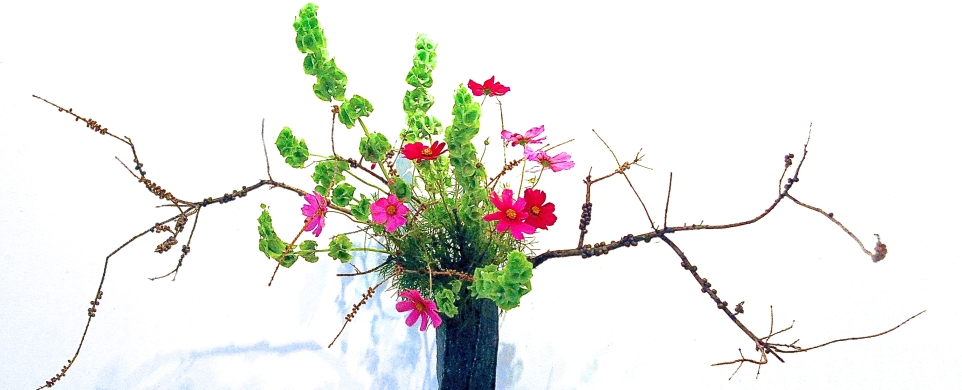
This is a welcoming flower for a private residence in Melbourne. The focus was the marvellous movements of the Bottle Brush branches. As the main feature was the branches, I did not use many flowers for this arrangement. Otherwise, it would lose its sophistication.   

Reference

Kobayashi, Yoshiho (2007). Hana no Seiritsu to Tenkai. Kyoto: Izumi Shobo.


http://www.shoso.com.au
https://www.facebook.com/ikebanaaustralia


Thursday, 3 July 2014


Thursday, 26 June 2014


Friday, 6 June 2014

Ikebana Today 24


What is ikebana? Let’s look into the word itself, Ikebana. When did people start using it? They needed to invent the word to describe something that could not be described using existing words. What was happening?  

Actually the word, Ikebana is really complicated. Historically, the first form of Ikebana was called Tatehana, standing flower. It became Rikka, which is in a sense the most sophisticated style of Ikebana, and is still practiced today particularly in the Ikenobo school. Rikka also means standing flower and the name reflects the form of arrangements made in this style.

Tatehana means to make lying flower (cut flower) vertical. That’s all. But Ikebana means to make dying flower alive. The focus is on something deeper than the superficial forms.     

It is also worth noting that in the beginning Ikebana was not a mainstream of style of flower arrangement, which had moved from Tatehana to Rikka. I suppose that some people felt the need to create a new word, Ikebana, as a way of criticising the major styles at that time, claiming that they were making flowers alive rather than simply making them stand up. 

Considering that Rikka was supported by samurais, aristocrats, and even emperors, naming a style “Ikebana” could be seen as an implied criticism of those in the upper classes, or even of the hierarchy itself. Imagine how radical it was to criticise flower arrangements appreciated by emperors. 


However, this is all just my hypothesis. I’ll talk more about the word, Ikebana in the next issues, based on the advice from the top Ikebana researchers in International Society of Ikebana Studies (www.ikebana-isis.org).  


This is the work I made for the exhibition of Mr and Ms Hoshino at Lesley Kehoe Galleries in December last year. Ms Hoshino’s container was extremely challenging to work with but I felt relived to know that both artists were happy with my work.     

http://www.shoso.com.au
https://www.facebook.com/ikebanaaustralia

Thursday, 29 May 2014


Friday, 2 May 2014

Ikebana Today 23


What is Ikebana? It may take a while to come up with a good definition.
Let’s start by looking at an official definition by Kojien. Ikebana is “making a decoration for a room by inserting branches, leaves and/or flowers cut from plants into a vase with water.” It is so simple but don’t you think that something essential is missing in this? We will come back to this definition at another time.

However, note that it points out the following three important factors in Ikebana. 1. It uses materials taken from plants. 2. It gives water to the plant materials. Plant material, containers, and water are the three essential components of Ikebana. 3. It is a decoration. This is a functional aspect of Ikebana. Therefore, good Ikebana means good decoration. I think it is important to start from this kind of basic definition in order to explore further what Ikebana is. 


This is one of the works I made for “Passage,” a collaborative Ikebana performance with Yumi Umiumare as part of Melbourne Now at the National Gallery of Victoria. While I was making two large works, Yumi danced about the passage from this word to the other world for one hour. 

Ikebana literally means to make flowers alive. We cannot make living flowers alive. That is not logical. We can make only dead flower alive. Ikebana is to give new life to cut flowers, which are in a sense dead flowers. The process of creating Ikebana is a metaphor for the spiritual passage, which our performance was all about. I’ll talk about this aspect of Ikebana more in detail sometime soon.  


http://www.shoso.com.au 
https://www.facebook.com/ikebanaaustralia

Sunday, 6 April 2014

Ikebana Today 22


Let’s consider the relationship between art and Ikebana. More specifically, did Ikebana really become a form of Western art during the Ikebana boom after the war?

We need to review briefly the historical background to answer this question. After the Meiji restoration, the concept of fine art was introduced to Japan. Some Ikebana artists tried to develop Ikebana into an art form. Note that there was a general trend to Westernize Japanese culture and society at that time. This trend became even more prominent after the war. The transformation of Ikebana into art was supported by a great many people and resulted in the great Ikebana boom.

As I mentioned before, this phenomenon is a really interesting case study in cultural transformation. Changes in Ikebana reflect the changes in Japanese society and culture including spiritual orientations. 

Before discussing further about the relationship between Ikebana and art, we need to clearly define Ikebana and art in this context. First, what is Ikebana? There are many definitions of Ikebana but most of them seem to be too personal or too abstract to be useful for critical thinking. I may need to present my own definition to be able to move forward. I’ll talk about what Ikebana is from the next issue.

This month I would like to show my work for the office opening event of Olympus Australia in February 2014. It was a great cultural event with many renowned Japanese artists and performers invited to entertain. With beautiful golden screen at the back, my work has to be strong.      

http://www.shoso.com.au
https://www.facebook.com/ikebanaaustralia
Monday, 31 March 2014

Melbourne International Flower & Garden Show 2014


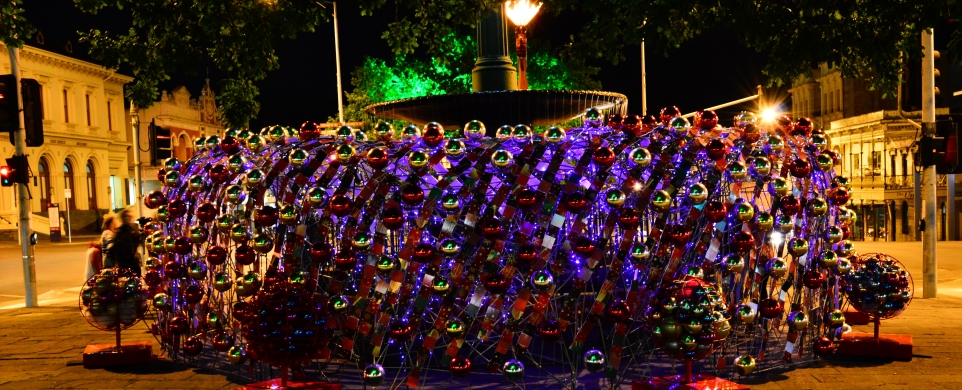
This work Frame is part of a larger interactive project, Showcase 2014, designed specifically for the Melbourne International Flower and Garden Show 2014. Showcase has a physical element in this work here, and a virtual element on Facebook. 

Shoso invites you to complete the virtual element by uploading a photo of you and your friends with Frame as a background. To be part of Showcase 2014, stand outside the exhibit and take a photo using Frame as a backdrop. Then follow the instructions below to upload your best photo. Check the ShosoMIFGS Facebook page the next day to see your contribution to Showcase 2014. 


It took us three days to set up the work and many of Shoso's students volunteered to help set up and break down. Thank you Jo, Emalia, Angeline, Jennie, Risa & Akemi for your great help. Without your help, we could not complete the work in time.  


http://www.shoso.com.au
https://www.facebook.com/ikebanaaustralia
Tuesday, 18 March 2014


Tuesday, 4 March 2014

Ikebana Today 21


Now, let’s consider relationship between Ikebana and art. Our focus is Sofu’s statement, “Ikebana is Art”, that brought about the great Ikebana boom after the war. What did it really mean and what was the influence of that statement on Ikebana?

First, we have to think why Sofu had to make such a statement. We can easily assume that people in general did not think Ikebana was art at that time, therefore Sofu’s statement was controversial but meaningful. If everybody thought Ikebana was art, nobody would make such a statement. 

Sofu’s view is easy to understand and was widely accepted. Traditional Ikebana is not art because everybody makes similar arrangements. Ikebana as art should be free, allowing each person to express his or her individuality. As I said before, this idea is not his own original one and I just wanted to review the outline of Sofu’s argument this time.  

Almost 50 years have passed since the beginning of the great Ikebana boom. It is a good time to reconsider the relationship between Ikebana and art. In order to start such a discussion, it is necessary to define clearly what is Ikebana and what is art. We may start to talk about the definition of Ikebana in the next issue.        

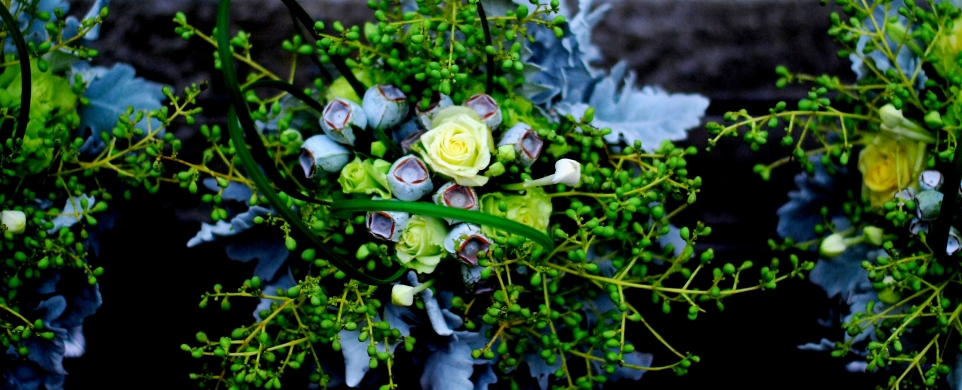
This month I would like to show an Ikebana arrangement I made for delivery. Although it is quite an unusual concept for traditional Ikebana, I have to accept these kinds of orders as an Ikebana artist working outside Japan. I used down-sticks and florist foam to fix flowers. The container is to give away. As it is a delivery item, the size has to be easy to carry. To meet popular demand, I used a lot of flowers, although that is not really my style. Actually, I believe that commercial Ikebana is a new style that not many Ikebana schools are interested in developing. Maybe I should found a new Ikebana school to develop this commercial style!  

http://www.shoso.com.au https://www.facebook.com/ikebanaaustralia
Saturday, 1 February 2014

Ikebana Today 20


This time I’d like to talk about Ikebana and Art. One of the driving forces for the Ikebana boom after the war was a slogan by Sofu Teshigahara that Ikebana is art. I have already talked about why the word “art” had such magical power at that time. So what happened to the slogan during the 1980’s when Ikebana was declining?

In 1960’s, the word “art” seemed to have a special attraction. It meant something intelligent and cultural. But it does not seem be so special for women in 1980’s. The key word “art” (as in Western art) no longer seemed to be so effective in promoting Ikebana among young women. My focus is on the changing perception of the word “art” among young women in Japan.    

Since the 1960s, there have been many more opportunities for them to experience authentic Western art and a wider variety of art activities. Ikebana is no longer unique as an artistic activity. 

My third hypothesis about the reason for the end of Ikebana boom is that the word “art” has comparatively lost its appeal for young women. 
     
However, the role the word “art” played in the Ikebana boom was actually rather superficial. What is important is that the movement to make Ikebana into art had a significant influence on the development of Ikebana after the war. I’ll talk more about this complicated topic from the next issue.  


I made this work for my client who wanted me to use three Christmas colors. It is a rather difficult request that requires careful calculation to find the right balance of colors and flower materials.

http://www.shoso.com.au 

https://www.facebook.com/ikebanaaustralia