Melbourne Ikebana Festival, 29 and 30 August 2026ikebanafestival.com

Friday, 27 February 2015

Shoso at Conferences


a. Shoso has been invited to give a talk about contemporary Ikebana at Kyoto University of Art and Design in April 2015. Japanese presentation.
When: 2-4pm, 2 April 2015
Where: Kyoto University of Art and Design
https://ikebanastudies.wordpress.com/2015/01/08/isis-regular-conference-spring-2015/

b. Shoso will present his paper about “Power in the Discourse of Art: Ephemeral Arts as Counter-monuments” at the Asian Conference on Arts and Humanities in April 2015. English presentation.   
When: 3-5 April 2015
Where: The Osaka International Convention Center
http://iafor.org/conferences/acah2015/

His paper will be published in the conference proceedings and will be available online.  

http://www.shoso.com.au
https://www.facebook.com/ikebanaaustralia

Monday, 16 February 2015

10 Plants to Have for Ikebana Artists

One of our new Ikebana students asked me what kind of plants to grow in her garden. She is very lucky to have some space to grow special plants for Ikebana. Here is a list of 10 plants that I found very useful for Ikebana and relatively easy to grow. Start to collect these plants in your garden. They are all in my garden. I'll present some other time a list of 10 plants for more advanced Ikebana artists.

1. Japanese Maple (Momiji). You must have at least one maple tree. I am fortunate to have seven.


2. Japonica (Boke). Personally I like white best. If possible please grow red and pink as well.


3. Black Pine (Kuromatsu). There are many types of cypresses or pines that are useful for Ikebana. Choose what you like. If you have large space, Black Pine is the best.


4. Japanese Mahonia (Hiiragi nanten). There are several types. I like the one with smaller leaves. Its branches are ideal for practicing basic styles of Ikebana.


5. Camelia. Popular types in Ikebana are white single petal ones such as Kamo Hon Ami, Wabisuke   or Shiratama. The photo is our new Kamo Hon Ami. I am looking for Wabisuke now.


6. Vines. They are wonderful for Ikebana. Jasmine is good. My favourite is Chocolate Vine (Akebi)(photo).


7. Pieris/Temple Bells (Asebi). They are so beautiful all year around. My recommendation is one with bright green leaves and pure white flowers.


8. Magnolia. I have Royal Star (Kobushi) and Manchu Fan. Choose what you like.


9. Throatwort (Yugiriso). This can be a nice filler for any style of Ikebana.  


10. Pearlbush (Rikyubai). Its white flowers in spring are so sweet.


http://www.shoso.com.au
https://www.facebook.com/ikebanaaustralia
Wednesday, 11 February 2015

Basic Ikebana Articles


I decided to republish the following two of my short articles on Ikebana for two reasons. First, I am going to rewrite and extend the first article, Ikebana and Zen for a journal.  I'll let you know the details here sometime soon.

Second, I am disappointed to witness unkind behaviour of an Ikebana practitioner lately. This Ikebana teacher represents some Ikebana group but he does not seem to understand what Ikebana is for. What he did would not be accepted in Japan where Ikebana teachers are well respected not just for their skills but chiefly for their virtues. 

As far as I know, an Ikebana teacher could not survive in Japan if he or she is rude, unkind or ungenerous. There is social expectation for him/her, which could be social pressure or even sanction. Just imagine a role of a priest in a community in a country like Australia. There is something similar in the role of an Ikebana artist in Japan.   

Sometimes we have to be strong to be kind to others. Good Ikebana artists seem to know that flower can give power and courage to overcome their inner fears.      

Ikebana may have become popular overseas, but do they really understand that it is a way of personal development?


1. Ikebana and Zen: The Ten Virtues of Ikebana

2. Ikebana and Shinto


http://www.shoso.com.au
https://www.facebook.com/ikebanaaustralia
Sunday, 1 February 2015

Ikebana Today 32


In the Muromachi period, Ikebana had two contrasting styles, the official tatehana and popular ikebana. I am assuming that there was a cultural conflict between them. Tatehana belongs to the Yayoi – the aristocrat - Buddhism tradition, while ikebana belongs to the Jomon - samurai - Shinto tradition. Based on this assumption, we now can answer the question: Does ikebana mean to bring flowers back to life or to make flowers live longer?

The answer is former. If the latter was correct, the interpretation is not logical. Both styles of Ikebana are trying to make flowers live longer by supplying water to them and therefore, there is no difference between them. There has to be a contrasting relationship between them. 

The former, on the other hand, means that ikebana tries to bring flowers back to life but tatehana is not. It is logical. But what does it mean to make flowers revive? This is more difficult question. We will think about it in following issues.

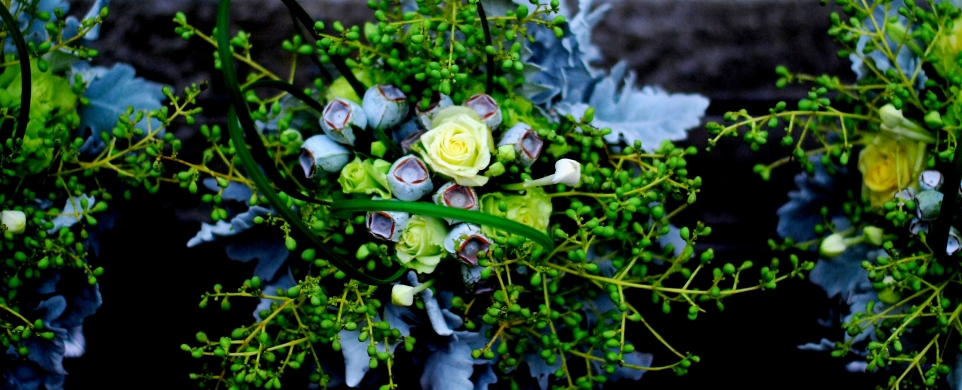
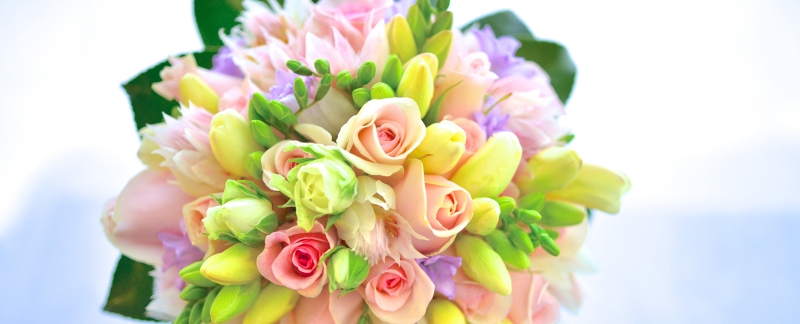
This is a sample of a bridal bouquet I made recently. The request was to use complementary colours. To achieve dynamic harmony, like Ikebana, I used 3 different sizes of roses and carefully arranged the 2 different colours. We will create any style of bridal bouquets.

My course at RMIT University, Japanese Aesthetics from Ikebana to Contemporary Art will start again in 2015. Please join the course and meet interesting creative students. 


http://www.shoso.com.au 
https://www.facebook.com/ikebanaaustralia
Thursday, 29 January 2015

Driftwoods Composition


I was asked to create a small sculpture using driftwoods. I tried to show what the natural materials can be rather than what I can do to them.

http://www.shoso.com.au
https://www.facebook.com/ikebanaaustralia
Monday, 26 January 2015

Australia Day Flower


A table arrangement for an Australia Day home party.

http://www.shoso.com.au
https://www.facebook.com/ikebanaaustralia

Sunday, 25 January 2015


Thursday, 1 January 2015

New Year's Displays


New Year's displays for Koko Japanese restaurant, Crown Hotel, Melbourne.

http://www.shoso.com.au
https://www.facebook.com/ikebanaaustralia

Sunday, 28 December 2014

Ikebana Today 31


In the previous issue, I mentioned that Professor Yamane pointed out 3 factors that contributed to the birth of Ikebana in the Muromachi period: the Aristocrat factor, the Shinto and Buddhism factor, and the Samurai factor.  

However, I cannot agree with his theory. I would like to focus on the contrast between Jomon culture and Yayoi culture. Jomon is the Japanese native culture related to Shinto. The Yamato clan gained power during the Yayoi period and established the Japanese nation in the 5th to 8th century with strong influences from China and other foreign cultures. Towards the end of Heian period (794-1192) the Samurai class gained power. 

Considering that they had a strong base in Kanto and Tohoku, far away from Kyoto, their culture was probably deeply rooted in the Jomon culture. I think the establishment of the Kamakura shogunate (1192) brought about a revival of the Jomon/Shinto culture. New Buddhism movements in that era, including Zen, are actually a Shintonization of Chinese Buddhism.

Based on my hypothesis, we could reinterpret Professor Yamane’s theory. We could suggest a contrast between the Yayoi/Aristocrat/Buddhism factor and the Jomon/Samurai/Shinto factor. Then, we could assume that Tatehana, the main stream Ikebana in the Muromachi period belongs to the former, while the new ikebana belongs to the latter. The new style of Ikebana, ikebana, was in opposition to Tatehana reflecting the strong cultural differences. New art does not develop naturally but can be understood as an opposition to the existing art.         

Now we can finally answer to the question: does ikebana mean to make dead flower alive or to make flower live longer? I will give an answer next month.


This is the work I made for the Lesley Kehoe Galleries during Mr Tomokazu Matsuyama’s exhibition in October 2014. Thanks to these large bamboo containers, my clients happily accepted my design proposal and they loved my work.      

http://www.shoso.com.au
https://www.facebook.com/ikebanaaustralia

Tuesday, 23 December 2014

Christmas Wreath


This is a large wreath (about 70 cm diameter) using fresh flowers. To emphasise contrast in forms the number of colours were limited.

The controlled irregular design (inherited from Ikebana) makes this wreath so special. People keep watching this work enjoying the dynamic harmony.

http://www.shoso.com.au
https://www.facebook.com/ikebanaaustralia

Wednesday, 3 December 2014

Wedding Flowers in Spring


Hand-tied Bouquets for Bride maid and Bride. We were asked to combine complementary colours in a bouquet. It is a challenging request, but we mixed about 70% yellow and 30% purple to create strong impact and harmony. We also used three different types of roses (small, medium and large) to create dynamic order.

http://www.shoso.com.au
https://www.facebook.com/ikebanaaustralia

Sunday, 30 November 2014

Ikebana Today 30


We have been thinking what ikebana (a style of Ikebana in the Muromachi period) is. It seems to mean making flower alive. Does it mean whether to make dead flowers revive or to make dying flowers live longer?

This is actually a really important question. Considering that so little is known and much research is needed in the historical of Ikebana, we may need to propose a bold hypothesis to answer to the question.

A highly regarded Ikebana researcher, Yuzo Yamane pointed out three cultural factors that contributed to the birth of Ikebana in the Muromachi period: aristocrat factor, Buddhism and Shinto factor, and Samurai factor. Combination of there factors are thought to have contributed to the development of Ikebana.      

However, I’m not satisfied with his theory. Assuming that Ikebana is related to the fundamental factors in Japanese culture, I have to propose my own hypothesis regarding the origin of Ikebana in the next issue. 


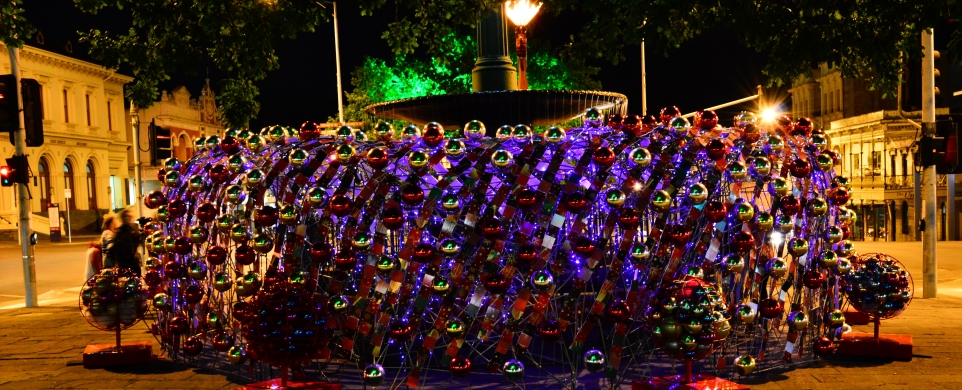
This month I would like to show my installation, the Sacred Tree that I made for the new arcade in Upper West Side, Melbourne in July this year. Although the idea of Shimenawa—a maker for a sacred space in Shinto—was behind this work, many commented that it was like a Christmas tree. I don’t mind about such interpretations.    

http://www.shoso.com.au 
https://www.facebook.com/ikebanaaustralia

Monday, 24 November 2014


Friday, 21 November 2014


Sunday, 9 November 2014