Melbourne Ikebana Festival, 29 and 30 August 2026ikebanafestival.com

Friday, 4 November 2016

Ikebana Today 52


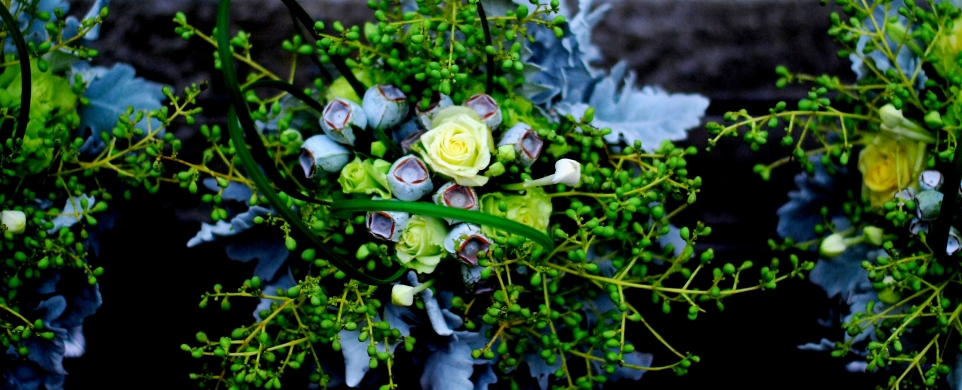
Recognising the differences between Ikebana and contemporary art would help us to understand both of them better. For instance, compare my ikebana which I made for Hanabishi Japanese restaurant with Flower by a contemporary artist, Takashi Murakami (Google Flower, Murakami).
Although I don’t know much about Murakami, I can assure you that you can never make any sense of the work no matter how much you look into the image. I have said before that the the most crucial element in contemporary art is meaning. Then, what is the meaning of this work? Perhaps it is in the contexts of history of Japanese painting including ukiyoe and anime, and that of Pop arts in America. Without the knowledge of the art historical contexts, you cannot really appreciate the work.

On the other hand, what you see is everything in Ikebana. Of course, sometimes the knowledge of  historical or social contexts is required to interpret an Ikebana work. But Ikebana is not very good at utilising its external contacts. It is sensibility rather than intellect that matters in appreciating Ikebana. In that sense, I think Ikebana is a bit similar to Haiku. 

For example, what is the essence of the famous Haiku by Basho, “An old pond — a splashing sound of a frog jumping in”? It must be silence or solitude in nature. The crucial thing is whether you can sympathise with this verse or not. Some may interpret this Haiku philosophically. If you think about unimportant details too much, however, you would miss the essence of the art.

Notably, in both Ikebana and Haiku, the creators have to develop refined skills to produce works that resonate in the heart of the viewers/readers. Artistic skill or craftsmanship is valued. Acquiring such skills involves training. The process is traditionally referred to the way of art and is synonymous with personal development in Japan.  

However, as I mentioned, in western art, particularly before Impressionism, skills were not so valued. Flower paintings can be made by anyone if he/she has skill, therefore it is not so valuable. On the other hand, historical paintings require imagination, narratives and inspiration, therefore are more valuable. Such an attitude may still prevail in contemporary art. 

In sum, sensibility is important to appreciate Ikebana, while intellect is necessary to appreciate contemporary art.           

          
http://www.shoso.com.au
https://www.facebook.com/ikebanaaustralia

Thursday, 3 November 2016

Friday, 28 October 2016


Sunday, 23 October 2016

Ikebana Today 51


I have been writing about the differences between Ikebana and contemporary art. I pointed out that their differences are similar to the differences between haiku and a novel. If we compare Ikebana to haiku, and contemporary art to the novel, we would have a better understanding of the two genres. Before I start to talk about that, however, I had better mention how flowers have been regarded in the history of Western art. Such knowledge would help us to understand my argument on Ikebana and haiku.  

Bencard (2004) stated, “Ever since antiquity still-life pictures, including flower paintings, have been considered a low-status art genre. Flower pictures were disdained because they were the opposite of history painting, which topped the genre-hierarchy of the art academies.” While history paintings narrate something, flower paintings just depict something. While history painters had to have good ideas, knowledge and imagination, flower painters could paint from nature without thinking about anything. While history painting was considered real art, enjoying the status of inapproachable high culture, flower painting was regraded as craftsmanship, easily accessible, popular, even kitschy.     

Such a stereotyped opposition determined for centuries people’s view on flower paintings. It may influence our view of floral art, including Ikebana even today. But in the 19th century the genre hierarchy of the art academies broke down with the rise of the Impressionism.

What I want to emphasise here is the values in Western art. It seems that they valued meaning and something intellectual in art work, while being simply beautiful or high craftsmanship was not valued so much. I may mention in the future that gaining high craftsmanship was highly regarded as a result of personal development in the East. Nevertheless, I am now ready to move to the discussion of the similarity between Ikebana and haiku. 

This is a work I made for Chotto, 35 Smith St, Fitzroy. The newly opened Japanese cafe is so popular that they often have to close early, due to having sold out of all the food.

This month we will have an Ikebana exhibition at Abbotsford convent on 8 & 9 October. www.facebook.com/wa.ikebana

Bencard, E. J. (2004), Some questions for flora, The Flower as Image. Louisiana Museum of Modern Art: Denmark.      

http://www.shoso.com.au 
https://www.facebook.com/ikebanaaustralia

Sunday, 9 October 2016

Thursday, 6 October 2016


Monday, 19 September 2016

Monday, 12 September 2016


Sunday, 11 September 2016


Tuesday, 6 September 2016

Ikebana Today 50


I have been writing about the differences between Ikebana and contemporary art. Although there are many differences, what is the most important and fundamental difference? Recognising such a difference would help us to understand better both Ikebana and contemporary art.

After practising the both forms of art for a while, I now realise that their difference is a bit similar to the difference between haiku and a novel. For me creating Ikebana is just like creating haiku and making a sculpture is like writing a novel. I’ll explain the difference more in detail in the next issues. 


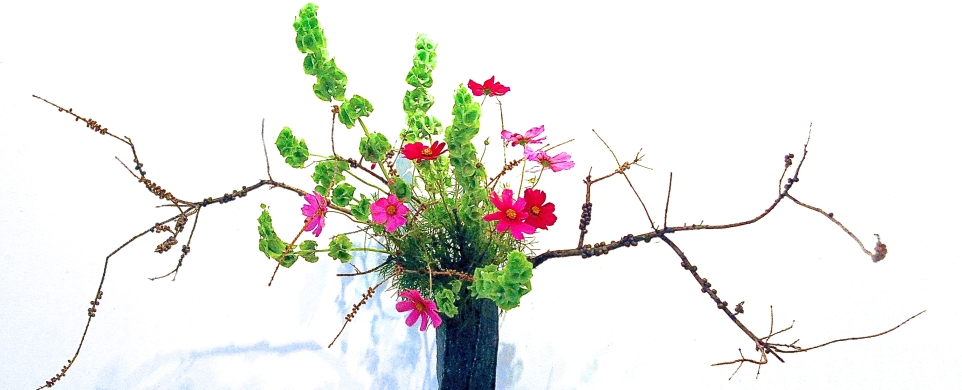
This is the Ikebana work I made for Shumei Kobayashi’s exhibition at the Lesley Kehoe Galleries on Collins St, Melbourne. I used a container by a master potter, Shoji Mitsuo. I heard that Mr Shoji visited the opening and I hope that he liked it. Arranging many Japonica branches one by one was wonderful meditation for me. I hope many people will experience that through Ikebana. I also hope that many will visit our Ikebana exhibition at Abbotsford convent on 8 & 9 October.    

http://www.shoso.com.au
https://www.facebook.com/ikebanaaustralia


Friday, 2 September 2016


Sunday, 14 August 2016


Wednesday, 10 August 2016