Melbourne Ikebana Festival, 29 and 30 August 2026ikebanafestival.com

Thursday, 23 October 2014


Friday, 17 October 2014


Thursday, 16 October 2014

Daily Meditation


I have been showing a series of my my ikebana works, Daily Meditation on our Facebook pages, https://www.facebook.com/IkebanaGallery and https://www.facebook.com/ikebanaaustralia.

From time to time the visitors to the pages ask similar questions, what do you mean by daily meditation?, or what do you mean by 'using left over materials'?

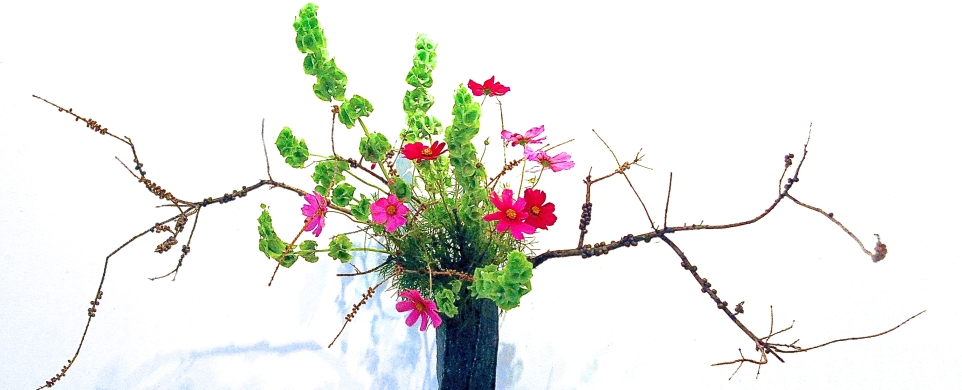
I make ikebana works almost every day. Making them is a daily ritual as well as meditation for me. I hope viewing them would be meditation for the viewers as well. So I named the series Daily Meditation.

As anyone working with flowers knows, there are always some left over flowers after lessons or after making commercial works. That's inevitable. Sadly we usually have to throw them away. However, I often save them from our rubbish bin and make another ikebana work. 

As discarded followers, they are always limited in quantity, quality and selection. With such limitation I can still make something interesting and I would like to share it on our Facebook pages.     
      
http://www.shoso.com.au 
https://www.facebook.com/ikebanaaustralia


Monday, 6 October 2014

Ikebana for Home Party


This is another example of our Home Party Package A: 1 medium arrangement with a give away container + 2 small table arrangements with a plastic container each.

Visit our Display & Delivery page for the details.  

http://www.shoso.com.au 
https://www.facebook.com/ikebanaaustralia

Thursday, 2 October 2014

Ikebana Today 28


We have been trying to find out what Ikebana is. Historically ikebana was a style of Ikebana (Ikebana as a general term for Japanese flower arrangement). It was contradiction to Takehana, the main stream of Ikebana but it seems to have something essential about Ikebana. Then, what is the essence of Ikebana? 

Let’s  look at the word “ikebana” more carefully. The word consists of ike and bana. Bana means flowers. What is ike(ru)? The original form of ikeru is a verb, iku, which has three basic meanings: 1. to make alive, 2. to do ikebana, 3. to bury (plants), etc. The first one is the oldest and closest to the original meaning of the word. 

So ikebana originally means to make flowers alive. We could imagine someone was arranging flowers around 15th century in a new fashion thinking “I am not making flower upright like Tatehana. I am making flowers alive. Let’s call what I am creating ikebana”. We now have to think what does it mean to make flowers alive. 

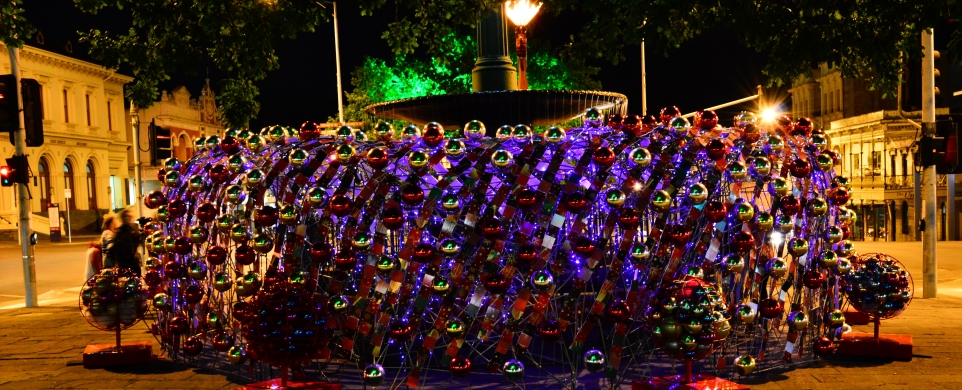
This month I’d like to show you my Christmas installation, Magical Tunnel  commissioned by the city of Ballarat in 2013. It is covered with solar lights and people can walk through the illumination at night. My task was to recycle the Christmas decorations and wastes from the previous years. To recycle them I had to break them down into smaller units and rearrange them into a new form. That process was very similar to Ikebana, breaking down natural materials and rearrange them in a harmonious order. This work was chosen as the most popular Christmas art work by the people of the city.     

    
http://www.shoso.com.au 
https://www.facebook.com/ikebanaaustralia

Wednesday, 1 October 2014

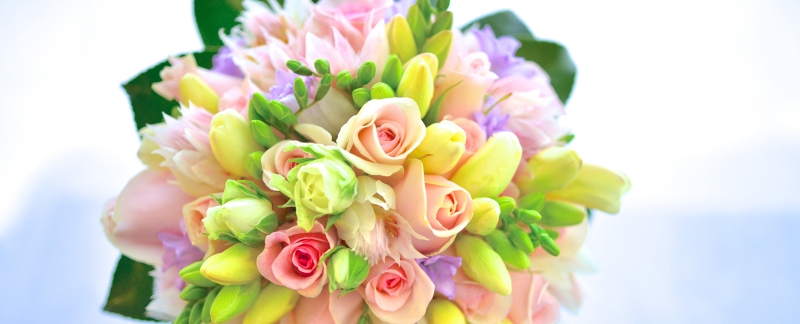
Bridal Bouquet by Shoso


A wired bridal bouquet is light, easy to carry, long lasting and flexible in design. 

"Thank you so much for the beautiful flowers. I was so pleased and they had such a wonderful fragrance. Many many thanks."  

http://www.shoso.com.au 
https://www.facebook.com/ikebanaaustralia

Sunday, 28 September 2014

Ikebana Delivery for Wedding


This is a sample of Large Ikebana for delivery with a give-away container. Shoso made this arrangement for a wedding reception. 

Shoso can set up a Ikebana display of any size on the site but some clients accept only delivery service.  This is the largest size for delivery.

Details: Display and Delivery

http://www.shoso.com.au 
https://www.facebook.com/ikebanaaustralia

Wednesday, 24 September 2014

A Table Arrangement for a Spring Dinner Party


A table arrangement (top) + a medium arrangement: This is another sample of our Special Home Party Package A. Please click images to enlarge.


Package A. 1 medium + 1 or 2 table arrangements (small b in our price list) $250 ~
Package B. 2 medium + 1 or 2 table arrangements (small b in our price list) $450 ~

Go to Display & Delivery page for more details.
  
http://www.shoso.com.au 
https://www.facebook.com/ikebanaaustralia

Monday, 22 September 2014

New Product: Mini Stage Flower


Would like to offer fresh flower arrangements to your guests at a budget price? Each arrangement has a special wrapping at the base to keep the flowers fresh and a Japanese paper overlay. Your guests will be impressed by these classy little bouquets. 
From $20 each, Minimum order 10.

http://www.shoso.com.au

Saturday, 13 September 2014

Free Ikebana Calendar 2015


Download free ikebana calendar 2015 by Shoso Shimbo.
International Version with no holiday
http://www.scribd.com/doc/239537657/Ikebana-Calendar-2015-International-Version
Australian Version with Australian Holidays
http://www.scribd.com/doc/239537249/Ikebana-Calendar-2015-Australia-Version
日本版
http://www.scribd.com/doc/239546204/Ikebana-Calendar-2015-Japanese-Version

http://www.shoso.com.au 
https://www.facebook.com/ikebanaaustralia


Monday, 1 September 2014

Ikebana Today 27


We have been discussing what Ikebana is. One of the interesting questions was why ikebana has become Ikebana. In other words, why ikebana, a specific style of Ikebana has become a general term for Japanese flower arrangement. Originally it was just a reaction against the authoritative styles such as Tatahena and Rikka.

While I was reading an article by Dr Inoue, some ideas came to my mind. One of the interesting findings in his article is that there was a big dispute over ikebana in Japanese history. Rikka masters (Ikenobo school), ikebana masters (other ikebana schools) and tea masters were all arguing that ikebana belongs to them but not to others.

Even though ikebana was counter cultural, probably it was so popular that everybody wanted it. Because it was so popular, ikebana has become Ikebana, a general term. That is a quite convincing hypothesis but now we have to ask a more important question: why was ikebana so popular? It might have something special that Tatehana or Rikka did not have. That might be something to do with the essence of Ikebana. We have to think more about the nature of ikebana.

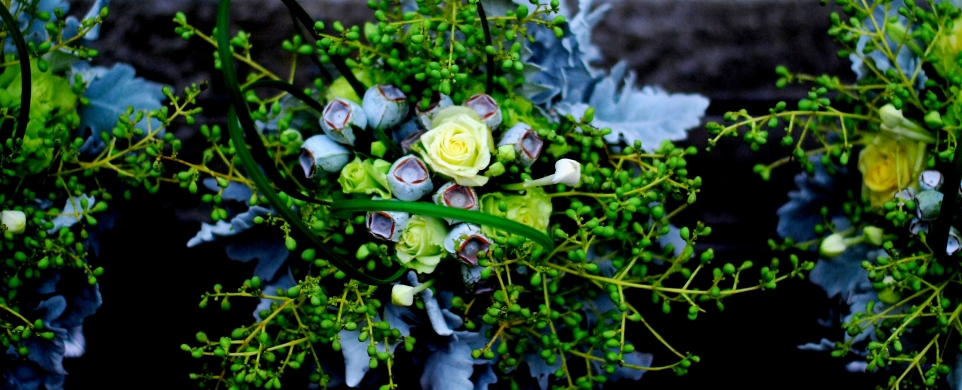
This is a sample of a small arrangement of our home party package, which consists of a small arrangement, table arrangement and medium arrangement. Using my client’s  colorful container, I chose to use rather simple and clean combination of white and green.   

I am going to teach “Japanese Aesthetics: From Ikebana to Contemporary Art” at RMIT University from October this year. Please check the details. 
http://www.shortcourses.rmit.edu.au/course_page.php?course=S320193

Reference: Inoue, Osamu (2011). Chabana and Nageirebana in the early modern times: Their differences and similarities. 


http://www.shoso.com.au 
https://www.facebook.com/ikebanaaustralia

Thursday, 28 August 2014


Sunday, 10 August 2014


Tuesday, 5 August 2014


Friday, 1 August 2014

Ikebana Today 26


We have been examining this huge question, what is Ikebana? We have been trying to find how the word, Ikebana came about historically. I assumed that ikebana (a style of Ikebana) was created in contrast to Tatehana and Rikka, the mainstream styles of Ikebana. 

In answer to my question about the origin of ikebana Dr Osamu Inoue (Vice president of International Society of Ikebana Studies, Kyoto University of Art and Design) sent me his paper, “ Chabana and Nageirebana in the early modern times: Their differences and similarities.” It is a brilliant work and suggests that my assumption about ikebana was right to some extent.

However, the origin of ikebana is too complicated to talk about in this essay. There are so many definitions of ikebana in Japanese history. One thing we do know is that in the early modern era ikebana was in opposition to Tatehana, the style of flower arrangements mainly for ceremonies. In Tatehana, the main stem tends to stand upright at the centre of the arrangement. Some people felt that the style was too rigid and too artificial. It was a wish to create something more naturalistic that motivated the development of ikebana. 

At the base of the long history of Japanese Ikebana philosophy is the opposition between Tatehana and ikebana, between artificial and naturalistic, and man and nature. These opposing ideas led to a deepening of the philosophy of Ikebana. The result was a unique Japanese art form with a rich aesthetic.

Ikebana means to make flowers alive, which can be achieved through respecting how they are in nature. If you manipulate flowers too much, you are not making them alive. I’ll discuss this point further sometime soon. 

This is the work I made for Hanabishi restaurant in Melbourne. They always prepare interesting materials for me and I was given yuzu this time. I hope you will enjoy my Ikebana works as well as the beautiful dishes at Hanabishi. 

This is the third year we run Ikebana Gallery Award for the Ikebana students all around the world. It seems to be popular with the number of page views over 50,000. We will publish the result in August. Please visit our new website.
http://ikebanaaustralia.blogspot.com.au


http://www.shoso.com.au 
https://www.facebook.com/ikebanaaustralia