Melbourne Ikebana Festival, August 2028ikebanafestival.com

Thursday, 19 November 2015

Installation for Archibald Prize Exhibition 4: Breaking Down


Finally, it's over. While I was working to break down my installation, I noticed that many birds were looking at me. I left some food for them.

I have been asked to create another installation for Ballarat Begonia Festival next year. I am pleased to know that my work was so popular! Thank you many people I met in Ballarat for great support and encouragement.    

If you would like to hire this metal framework, please concat Shoso.

http://www.shoso.com.au
https://www.facebook.com/ikebanaaustralia

Thursday, 12 November 2015

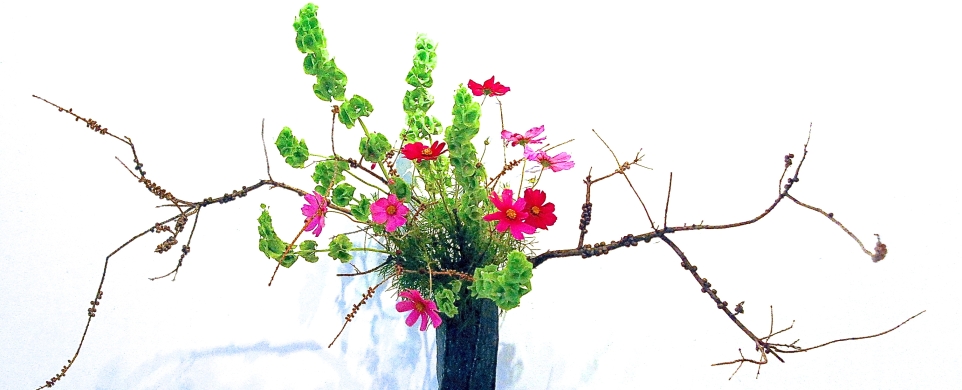
Ikebana Today 41


I mentioned last time that the one of the crucial factors in contemporary art is “Meaning”. Of course I’m aware of that there are a number of differing opinions and criticisms. My intention is to provide a quick introduction to contemporary art, in particular for art practitioners including Ikebana artists. Contemporary art has two trends: Modernism and Post Modernism. Postmodernism became influential after the mid-20th century but the Modernism trend has not disappeared. The two trends co-exist and influence each other. Meaning is an important factor for both trends but particularly for Postmodernism. 

Then, what about beauty? It seems that beauty in the ordinary sense is important for Modernism but not so much for Postmodernism, which often focuses on questioning Modernism.  

There are some works, such as commercially designed products or floral arrangements, that are simply beautiful. However, as long as they do not convey any meaning, they probably do not belong in contemporary art.  

Now, the next question is what is meaning in contemporary art. This is a very complicated question but I would like to answer it in a simplest possible way in the next issues.     

This is a work I made for Hanabishi restaurant, one of the top Japanese restaurants in Australia. 

We are going to have an Ikebana exhibition at Abbotsford Convent on 5 & 6 December 2015 with the Ikenobo School in Melbourne. Hope you will come and visit the exhibition to see our students’ works. Visit my site for the details.  

http://www.shoso.com.au
https://www.facebook.com/ikebanaaustralia
Thursday, 29 October 2015


Wednesday, 28 October 2015

Installation for Archibald Prize Exhibition 3 (Completed!)


My work will be on display till the end of Archibald Prize Exhibition 2015 at the Art Gallery of Ballarat. http://archibaldballarat.com.au

I'd like to thank the following people for their genenrous support:
Julie Collins, Daniel Henderson, Robert Kienbaum and the staff of the Art & Culture section, City of Ballarat,
Mark & Carolyn Guirguis,
The staff at the Art Gallery of Ballarat,
The staff and artists at the Backspace Gallery,
The Pickles Container cafe,
Ballarat Botanical Gardens,
My assistants, Margaret Meran Trail, Jo Greenthaner & Julie Shimbo 

http://www.shoso.com.au
https://www.facebook.com/ikebanaaustralia
Wednesday, 14 October 2015

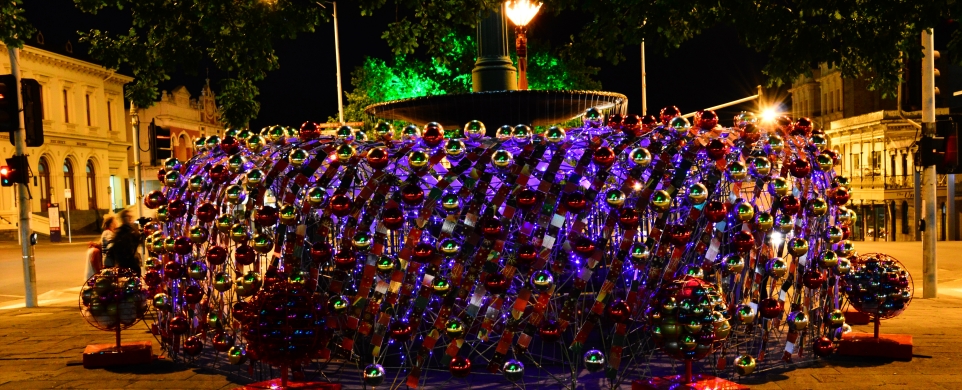
Installation for Archibald Prize Exhibition 2


Week 2 (11 October 2015): Shoso Shimbo's installation for Archibald Prize Exhibition at Art Gallery of Ballarat. His work will evolve in next 2 weeks. http://archibaldballarat.com.au

Cage (Bird of paradise / Paradise of birds)

Shoso Shimbo

In creating this work to celebrate the Archibald Prize Exhibition, the question I asked myself was “how can I, as an Ikebana artist, pay homage to the most significant portraiture award in Australia?” 

My original inspiration come from Self Portraits by Frida Kahlo (1907-1954). In her works Frida herself is in the midst of lush green foliage, flowers, birds and monkeys. It seems to me that the forest behind her represents an ideal state of spiritual freedom that is in contrast to her physically tormented reality. The role of nature in these works resonated for me as I am always interested in the relationship between humans and the natural world.   


I chose chicken wire to create a head, which in some ways resembles a cage. The chicken wire as well as the metal frame within creates a separation between the inner space and the unlimited freedom outside the work. Are we restricted by the reality of our physical being or can we allow our imagination to take us outside our cages and into the forest of our spirituality? In the back of my mind I also had some images of refugees who are sometimes kept in cage like circumstances, dreaming of the freedom that lies outside the cage. 

Although birds are usually kept inside a wire cage, you may see them enjoying themselves outside the cage in this work.    

http://www.shoso.com.au
https://www.facebook.com/ikebanaaustralia
Tuesday, 6 October 2015

Ikebana Today 40


Contemporary art is hard to understand, particularly for the Japanese. We are not very well informed about it. I’d like to talk about a few things that made me so surprised when I studied art. 

First, contemporary art is specifically about contemporary society and culture. It is different from art in general. This maybe just common sense for some but rather unexpected for others.  

Next, what is necessary in contemporary art? Is it beauty? I thought it was. But it isn’t. Beauty is important, but not necessary in contemporary art. This seems to be a point that Japanese people in general find very hard to understand. 

Takashi Murakami, a well known international artist, insists in his books, that many Japanese people don’t understand what contemporary art is. I don’t intend to explain in details as Murakami did, but would like to offer a quick guide to contemporary art. The crucial factor in contemporary art is meaning. If the artefact does not produce any meanings, it is not valued as art even if it is beautiful. I’ll explain a bit more about this aspect in the next issues.  

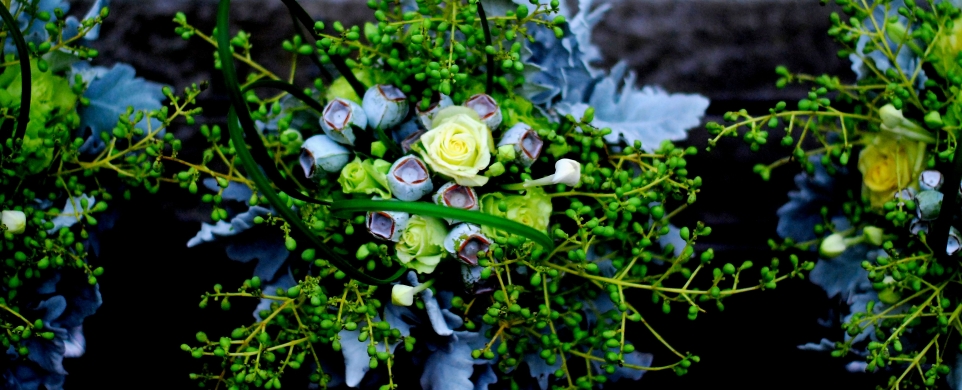
I used some of flowers from my garden in this work. Japanese quince and lily of the valley bush are among my favourites. By arranging flowers they grow, Ikebana artists enjoy the flower twice. 


I’ll spend half of October in Ballarat to create a large artwork for the Archibald exhibition at the gallery. We are also planning to have an Ikebana exhibition at Abbotsford Convent on 5 & 6 December. Please visit my site for the details.  

http://www.shoso.com.au 
https://www.facebook.com/ikebanaaustralia
Monday, 5 October 2015


Sunday, 20 September 2015


Saturday, 5 September 2015

Ikebana Today 39


Considering the relationship between ikebana and contemporary art, we need to first clarify what the contemporary art is. I found it so hard to understand even after the completion of my Master of Fine Art. During the course, I found two things.

First, many people in the art world don’t understand how difficult contemporary art is for the general public. Very few of them are willing to communicate with the general public to make art accessible. 

Next, I found that the key to understand contemporary art is in its history, particularly its 20th century history. Terry Barrett’s “Why is That Art?” (2012) is an excellent introduction to contemporary art elaborating the four major approaches: realism, expressionism, formalism and postmodernism. 

However, even that book may be too complicated for the people who are outside the art world. A simpler explanation would be useful for the the people who are frustrated with “nonsense" art woks in the galleries. 

I think that the first step to understand contemporary art is to recognise two major approaches in it: modernism and postmodernism. Let me explain the super complicated postmodernism in a super simplified way in next issues.

This is the work I created from my garden waste. The form of the glass container makes it hard to fix flowers using the down stick method.     

I have been commissioned to create a large artwork for the Archibold award exhibition at the Gallery of Ballarat in October 2015. Representational art is a new and big challenge for me.   

http://www.shoso.com.au 
https://www.facebook.com/ikebanaaustralia

Wednesday, 26 August 2015

Sunday, 23 August 2015


Tuesday, 18 August 2015

Monday, 17 August 2015

Thursday, 13 August 2015

Branch Sculpture: Japanese Aesthetics at RMIT University


Our students analysed works by Andy Goldsworthy and Hiroshi Teshigahara, and created their own works using branches on the fifth week.  This class will take participants on a journey to explore the theory of Japanese aesthetics through practical exercises.  

Japanese Aesthetics: From Ikebana to Contemporary Art 
Shoso Shimbo, PhD
RMIT University Short Course
New intake in October 2015
http://bit.ly/1hz7BTb

http://www.shoso.com.au
https://www.facebook.com/ikebanaaustralia

Wednesday, 12 August 2015

Daily Meditation: Japanese Mahonia


The volume and position of Japanese Mahonia is crucial in this work. Its yellow buds function to emphasise the dominant vertical movement without disturbing the movements of the curved leaves. The yellow dots also correspond to the four tops of the green stems cut sharply. The essence of traditional Rikka style was appropriated in this contemporary design.

http://www.shoso.com.au
https://www.facebook.com/ikebanaaustralia