Melbourne Ikebana Festival, August 2028ikebanafestival.com

Sunday, 28 December 2014

Ikebana Today 31


In the previous issue, I mentioned that Professor Yamane pointed out 3 factors that contributed to the birth of Ikebana in the Muromachi period: the Aristocrat factor, the Shinto and Buddhism factor, and the Samurai factor.  

However, I cannot agree with his theory. I would like to focus on the contrast between Jomon culture and Yayoi culture. Jomon is the Japanese native culture related to Shinto. The Yamato clan gained power during the Yayoi period and established the Japanese nation in the 5th to 8th century with strong influences from China and other foreign cultures. Towards the end of Heian period (794-1192) the Samurai class gained power. 

Considering that they had a strong base in Kanto and Tohoku, far away from Kyoto, their culture was probably deeply rooted in the Jomon culture. I think the establishment of the Kamakura shogunate (1192) brought about a revival of the Jomon/Shinto culture. New Buddhism movements in that era, including Zen, are actually a Shintonization of Chinese Buddhism.

Based on my hypothesis, we could reinterpret Professor Yamane’s theory. We could suggest a contrast between the Yayoi/Aristocrat/Buddhism factor and the Jomon/Samurai/Shinto factor. Then, we could assume that Tatehana, the main stream Ikebana in the Muromachi period belongs to the former, while the new ikebana belongs to the latter. The new style of Ikebana, ikebana, was in opposition to Tatehana reflecting the strong cultural differences. New art does not develop naturally but can be understood as an opposition to the existing art.         

Now we can finally answer to the question: does ikebana mean to make dead flower alive or to make flower live longer? I will give an answer next month.


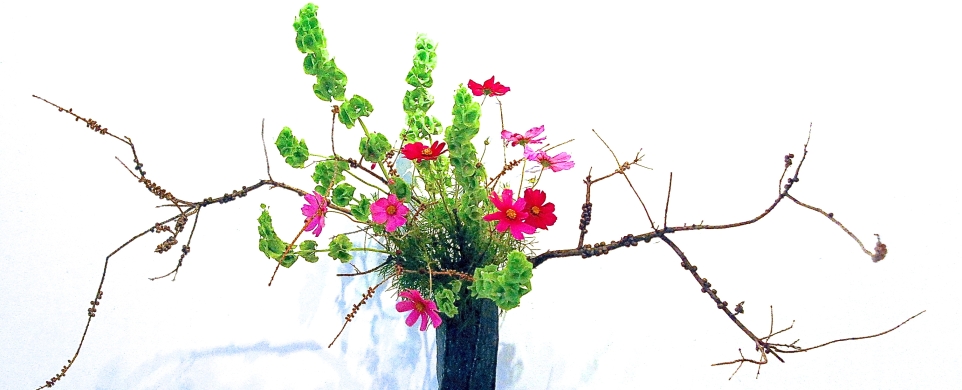
This is the work I made for the Lesley Kehoe Galleries during Mr Tomokazu Matsuyama’s exhibition in October 2014. Thanks to these large bamboo containers, my clients happily accepted my design proposal and they loved my work.      

http://www.shoso.com.au
https://www.facebook.com/ikebanaaustralia

Tuesday, 23 December 2014

Christmas Wreath


This is a large wreath (about 70 cm diameter) using fresh flowers. To emphasise contrast in forms the number of colours were limited.

The controlled irregular design (inherited from Ikebana) makes this wreath so special. People keep watching this work enjoying the dynamic harmony.

http://www.shoso.com.au
https://www.facebook.com/ikebanaaustralia

Wednesday, 3 December 2014

Wedding Flowers in Spring


Hand-tied Bouquets for Bride maid and Bride. We were asked to combine complementary colours in a bouquet. It is a challenging request, but we mixed about 70% yellow and 30% purple to create strong impact and harmony. We also used three different types of roses (small, medium and large) to create dynamic order.

http://www.shoso.com.au
https://www.facebook.com/ikebanaaustralia

Sunday, 30 November 2014

Ikebana Today 30


We have been thinking what ikebana (a style of Ikebana in the Muromachi period) is. It seems to mean making flower alive. Does it mean whether to make dead flowers revive or to make dying flowers live longer?

This is actually a really important question. Considering that so little is known and much research is needed in the historical of Ikebana, we may need to propose a bold hypothesis to answer to the question.

A highly regarded Ikebana researcher, Yuzo Yamane pointed out three cultural factors that contributed to the birth of Ikebana in the Muromachi period: aristocrat factor, Buddhism and Shinto factor, and Samurai factor. Combination of there factors are thought to have contributed to the development of Ikebana.      

However, I’m not satisfied with his theory. Assuming that Ikebana is related to the fundamental factors in Japanese culture, I have to propose my own hypothesis regarding the origin of Ikebana in the next issue. 


This month I would like to show my installation, the Sacred Tree that I made for the new arcade in Upper West Side, Melbourne in July this year. Although the idea of Shimenawa—a maker for a sacred space in Shinto—was behind this work, many commented that it was like a Christmas tree. I don’t mind about such interpretations.    

http://www.shoso.com.au 
https://www.facebook.com/ikebanaaustralia

Monday, 24 November 2014


Friday, 21 November 2014


Sunday, 9 November 2014


Thursday, 6 November 2014

Ikebana Today 29


We have been trying to find out the true meaning of the term, Ikebana. Ikebana literally means to make flowers alive. Sounds simple. But what does that really mean?

Making flowers alive could have two different meanings depending on whether it is alive or not before making arrangements. If the flower is dead, making it alive means to bring back to life. If the flower is alive, making it alive means to maintain its life. 

When someone first used the term, Ikebana, stressing that he is not simply making flowers upright like tatehana but making them alive, did he regard the flowers as alive or dead? It seems to be a small difference, but we often find something important by paying attention to such a small differences.  

Thinking about this may leaed us to much more profound issues about Japanese view on nature and art.


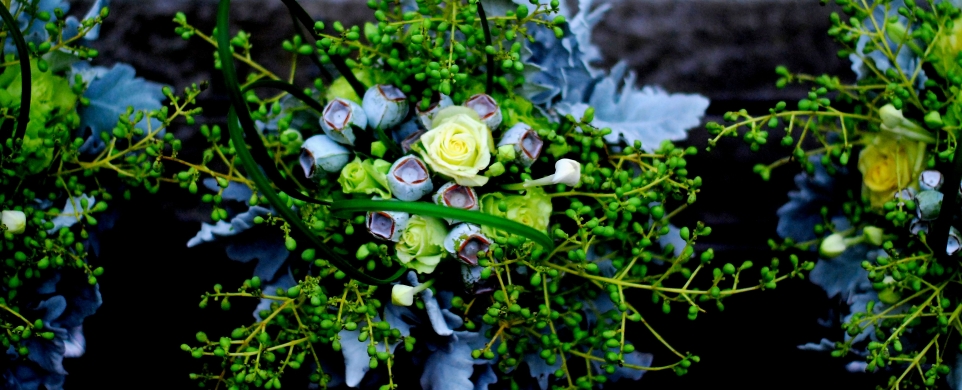
I would like to show you another commercial work of mine this month. This is an arrangement for a home party. Light colors of blue and yellow are working so well in this work. I used this image for free calendars 2015. Please download them from my website. 

If you are looking for a great Christmas gift for someone special, please consider our Ikebana lesson vouchers, which is also available from our website.              

http://www.shoso.com.au 
https://www.facebook.com/ikebanaaustralia

Thursday, 23 October 2014


Friday, 17 October 2014


Thursday, 16 October 2014

Daily Meditation


I have been showing a series of my my ikebana works, Daily Meditation on our Facebook pages, https://www.facebook.com/IkebanaGallery and https://www.facebook.com/ikebanaaustralia.

From time to time the visitors to the pages ask similar questions, what do you mean by daily meditation?, or what do you mean by 'using left over materials'?

I make ikebana works almost every day. Making them is a daily ritual as well as meditation for me. I hope viewing them would be meditation for the viewers as well. So I named the series Daily Meditation.

As anyone working with flowers knows, there are always some left over flowers after lessons or after making commercial works. That's inevitable. Sadly we usually have to throw them away. However, I often save them from our rubbish bin and make another ikebana work. 

As discarded followers, they are always limited in quantity, quality and selection. With such limitation I can still make something interesting and I would like to share it on our Facebook pages.     
      
http://www.shoso.com.au 
https://www.facebook.com/ikebanaaustralia


Monday, 6 October 2014

Ikebana for Home Party


This is another example of our Home Party Package A: 1 medium arrangement with a give away container + 2 small table arrangements with a plastic container each.

Visit our Display & Delivery page for the details.  

http://www.shoso.com.au 
https://www.facebook.com/ikebanaaustralia

Thursday, 2 October 2014

Ikebana Today 28


We have been trying to find out what Ikebana is. Historically ikebana was a style of Ikebana (Ikebana as a general term for Japanese flower arrangement). It was contradiction to Takehana, the main stream of Ikebana but it seems to have something essential about Ikebana. Then, what is the essence of Ikebana? 

Let’s  look at the word “ikebana” more carefully. The word consists of ike and bana. Bana means flowers. What is ike(ru)? The original form of ikeru is a verb, iku, which has three basic meanings: 1. to make alive, 2. to do ikebana, 3. to bury (plants), etc. The first one is the oldest and closest to the original meaning of the word. 

So ikebana originally means to make flowers alive. We could imagine someone was arranging flowers around 15th century in a new fashion thinking “I am not making flower upright like Tatehana. I am making flowers alive. Let’s call what I am creating ikebana”. We now have to think what does it mean to make flowers alive. 

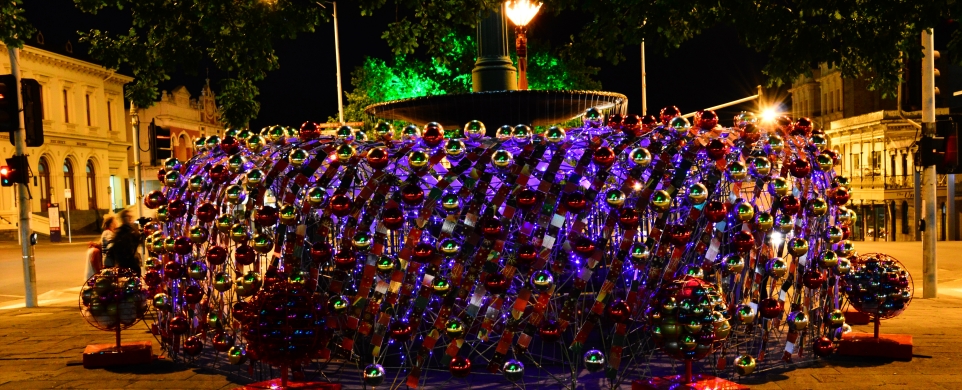
This month I’d like to show you my Christmas installation, Magical Tunnel  commissioned by the city of Ballarat in 2013. It is covered with solar lights and people can walk through the illumination at night. My task was to recycle the Christmas decorations and wastes from the previous years. To recycle them I had to break them down into smaller units and rearrange them into a new form. That process was very similar to Ikebana, breaking down natural materials and rearrange them in a harmonious order. This work was chosen as the most popular Christmas art work by the people of the city.     

    
http://www.shoso.com.au 
https://www.facebook.com/ikebanaaustralia

Wednesday, 1 October 2014

Bridal Bouquet by Shoso


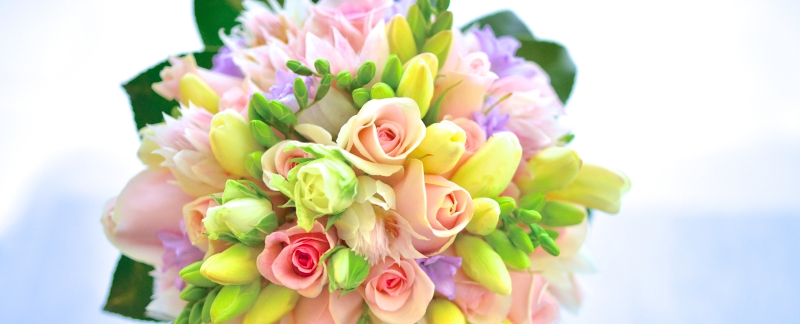
A wired bridal bouquet is light, easy to carry, long lasting and flexible in design. 

"Thank you so much for the beautiful flowers. I was so pleased and they had such a wonderful fragrance. Many many thanks."  

http://www.shoso.com.au 
https://www.facebook.com/ikebanaaustralia

Sunday, 28 September 2014

Ikebana Delivery for Wedding


This is a sample of Large Ikebana for delivery with a give-away container. Shoso made this arrangement for a wedding reception. 

Shoso can set up a Ikebana display of any size on the site but some clients accept only delivery service.  This is the largest size for delivery.

Details: Display and Delivery

http://www.shoso.com.au 
https://www.facebook.com/ikebanaaustralia