Melbourne Ikebana Festival, August 2028ikebanafestival.com

Wednesday, 25 January 2012


Tuesday, 3 January 2012

The Ten Virtues of Ikebana 8


The eighth of the ten virtues of Ikebana is a peaceful mind. Through practicing Ikebana, you can maintain a peaceful mind and consequently you can live longer.

Great people tend to be calm whatever happens in their lives. On the contrary small people get upset easily over small things. 

Also, as was pointed out by Inazo Nitobe in “Bushodo: The Soul of Japan”, calmness is the other side of braveness. 

With respect to this idea of calmness, what we are aiming for as we practice Ikebana is actually an important aspect of Bushido. In other words, this virtue makes the claim that  Ikebana is a form of spiritual training. 

This is a common assumption in the Japanese tradition, that art is a kind of spiritual training.

While in general art focuses on humanity rather than nature in the West, it is united with nature in Japan. In Ikebana particularly artistic beauty is achieved by expressing the essence of natural life. To be able to express beauty in artwork, artists have to achieve personal development through spiritual training. That seems to be a common view. 

The difficult thing is how to teach the spiritual aspect of Ikebana, in particular to people with non-Japanese cultural backgrounds.

Unfortunately one of the modern Ikebana movements in 1930’s moved away from the spiritual aspect of Ikebana. Many of the Ikebana schools that expanded overseas after the world war two have been influenced by that movement. I may have a chance to talk about this significant cultural change sometime in the future.

This month’s work is a New Year’s arrangement I made for Koko restaurant, Crown in 2009. I used bricks inside the container to fix bamboo. 

http://www.shoso.com.au
http://shososhimbo.blogspot.com/

Saturday, 17 December 2011

The Ten Virtues of Ikebana 7b


In my last article, I pointed out the similarity between the  seventh virtue, cleansing evil thoughts and the second virtue, selfless mind. It is true that both virtues are about the calming effects of Ikebana, but there is a small difference if you look into their definitions closely. In looking into it, the hidden essence of Ikebana may reveal itself.
Among the ten virtues of Ikebana, there is another virtue that refers to the effect of Ikebana on psychological states. That is the third virtue, pleasure without words. I was surprised to find that these three virtues are closely related on this level. 
Just think about Mamemaki. “Evil, Out; Fortune, In” is the phrase people use to celebrate this annual event. “ Evil, Out” means in essence cleansing Kegare, or impure states and this is the same as  the seventh virtue, cleansing the evil thoughts. Once Kegare is cleansed, we reach the neutral state of Ke. “Fortune, In” means to bring the cerebrated state, Hare.  This is the process similar to the change from pleasure without words to selfless mind. 
In short, behind these three virtues of Ikebana relating to the psychological states is the theory of celebration in Shinto. This will be a small part of my master paper in fine arts, which I will complete at the end of next year.
Although some people argue that Shinto is a folk religion compared to some world religions such as Christianity or Buddhism, its cultural significance should not underestimated in any way. 
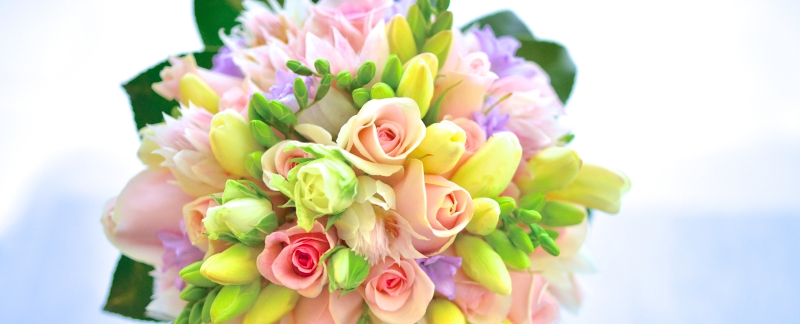
This is a work I made for a casual wedding reception at our home. My work was nice backdrop for wonderful dishes made by the groom who is a chef at Hanabishi restaurant. Since Christmas is close, I added holly leaves, red berries and vines painted silver. I used floral foam to fix the flowers. 


http://www.shoso.com.au
http://shososhimbo.blogspot.com/
Wednesday, 14 December 2011


Sunday, 4 December 2011


Friday, 2 December 2011


Tuesday, 22 November 2011

Friday, 18 November 2011


Wednesday, 16 November 2011

Exhibition Opening


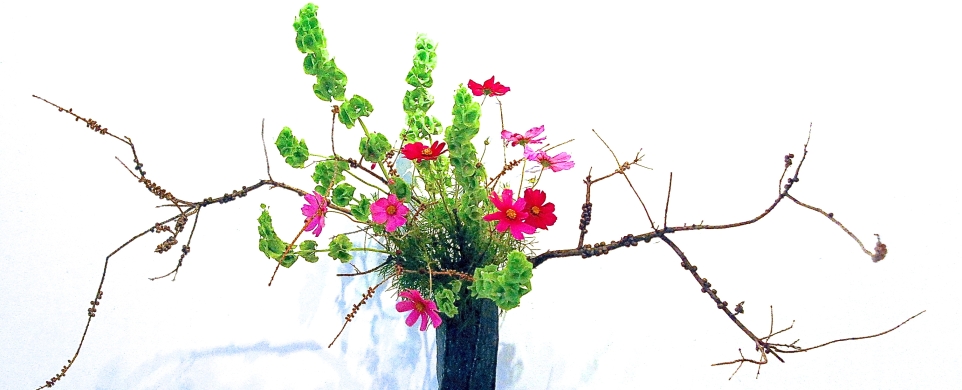
Lesley Kehoe Galleries asked me to create a display for an opening of Maio Motoko's exhibition. The artist's request was not to use any living materials! I took many different types of materials such as bamboos, found objects and coloured branches, but they were all rejected by the artist. Using only two types of dry branches, I managed to make this Ikebana work in time.

This is another wonderful show at the gallery. Highly recommended.

http://www.kehoe.com.au/

http://www.shoso.com.au
http://shososhimbo.blogspot.com/

Thursday, 10 November 2011


Monday, 7 November 2011

About Ikebana Exhibition


It is fortunate that we have had annual Ikebana exhibitions the last seven years. But there are so few Ikebana exhibitions, despite the fact that there are so many Ikebana teachers in Australia. 


Although some Ikebana schools make it compulsory for each branch to have annual Ikebana exhibition, some branches have ignored such requests. That is understandable considering there are so many difficulties in having an exhibition. Actually there are too many reasons or excuses for not having exhibitions. However, we believe that there are great benefits in having exhibitions.

a. Positive effects for students' learning: Students tend to achieve their personal best at an exhibition. Showing their works to public gives them confidence and motivation to learn more.


b. Professionalism: Exhibiting works is a challenging and demanding process from preparation to deinstallation. Experiencing that would better prepare students for future opportunities for professional works that include teaching, displays and competitions.


c. Career: One of my advanced students was preparing an application for a floral competition some time ago and told me that she had nothing to write about her artist career apart from her qualification as an Ikebana teacher. Although she had excellent academic and professional career in other fields, what matters for artists are exhibition history and awards. 


Unfortunately, there are very few opportunities for Ikebana students in Australia to gain these. That's why we have tried to have annual exhibitions that all of our students including beginners can participate. We are aiming to have an exhibition in a prestigious gallery in the near future. 


Also for the same reason, we have set up Ikebana Gallery Australia Award. We believe this will contribute lots for the future of Ikebana in Australia. http://ikebanaaustralia.blogspot.com/  


d. Promoting Ikebana. There are almost always some people who join the class after seeing our exhibition.


From Ikebana Newsletter Melbourne, December 2011.To subscribe our free newsletter, go to the News page in the following website.
http://www.shoso.com.au


Tuesday, 1 November 2011

The Ten Virtues of Ikebana: 7a


The seventh of the ten virtues of Ikebana is departing from any harmful thoughts.

We may sometimes have evil or negative thoughts. When we face flowers, however, these thoughts disappear instantly. Ikebana can help keep our minds calm – a real bonus in today’s world!

The seventh virtues is similar to the second virtues, selfless mind. They both means in essence that Ikebana helps release stress. While the the former focuses on cleansing the mind, the latter focus on nourishing the mind. Although the ten virtues of Ikebana was proposed about three centuries ago, the author was really aware of  and analytical of psychological effects of Ikebana. 
You may agree with me so far, but I wonder if you would still agree with me if I said this: there is a hidden secret of Ikebana in these virtues. Selfless mind and cleansing mind are almost the same thing. Then, why didn’t the author say simply Ikebana helps get rid of stress? 
But actually there is a very small difference between them. Focusing on the small difference the hidden essence of Ikebana would be revealed. Now I’m about to talk about  a new theory about Ikebana but I don’t have enough space for that this time. I’ll write about a new insight on Ikebana next time. 
I made another simple and cool Ikebana this month. Using stapler, I made a few rings of doracena leaves. Meditate on their relationship each other and with the container. When you are happy, add a stem of oncidium. Stick the stem to the leaves to fix.
There are a couple of exhibitions I participate in November 2011. 
The Toyota Sculpture Exhibition opens on 9 November at Toyota HQ in Port Melbourne and an Ikebana Exhibition opens from 12 to 18 November at Kings Arcade in Armadale. Please come and see my works.

http://www.shoso.com.au
http://shososhimbo.blogspot.com/
Friday, 21 October 2011


Thursday, 6 October 2011

About learning Ikebana


It may help for new students to know about the learning model in Ikebana.  Without that knowledge you may get frustrated in the first or second lesson. Learning Ikebana is a bit different from learning cooking or how to use a computer software, for instance. It is even different from learning some crafts such as western flower arrangements. It is more like learning dance or martial arts.

In the research of second language learning, in the 1980s an American researcher proposed an influential theory that distinguishes language acquisition from language learning. This theory is very helpful to understand the nature of learning Ikebana.

Our aim is not Ikebana learning but Ikebana acquisition. In the first lessons all you learn is how to create a basic design framework. Even if your teacher gives you positive feedback, you might feel that your work is not quite right. Indeed, your work is usually far from perfect. But that is OK. Acquiring Ikebana takes time. 

If you arrange private tuition rather than joining a group class in Ikebana, you may learn much more in one lesson. You may be able to make a near perfect basic style arrangement following the detailed instructions of your teacher. But can you really acquire Ikebana rather than learn Ikebana in the lesson? In other words, can you make another near perfect basic style by yourself after the lesson? Probably not. 


Even if you master grammar and pronunciation in the classroom, you may not be able to communicate very well in the second language. Learning a second language as knowledge does not help you much. 

But if you learn and use the language in real communication, you have a better chance of really acquiring the language. Language acquisition gives you the freedom to communicate and express yourself in the second language.

After the first lesson in a Salsa dancing class, you would not expect to be able to dance like a pro. All you can do are the basic steps. Although they are very simple movements, you need to practice a lot before you can go to the next step.

Then, your fee (private lessons would be 10 times more expensive) and the teacher's time may not be utilised well, although I would not say wasted. You may be able to learn Ikebana but you will not acquire Ikebana in one lesson. 

Only when you have acquired the basic design framework after practicing it a few times are you ready to move on to the next challenge. That's how the acquisition of Ikebana occurs. Only Ikebana acquisition gives you the freedom to make good Ikebana works with any materials under any conditions. Ikebana acquisition takes time, so be patient.    

http://www.shoso.com.au 
http://shososhimbo.blogspot.com/